Key takeaways
- Seal Rubber weather stripping trim seal review: push-on C-clip and EPDM D-loop design, clip and loop dimensions, fitment checks, and who it suits best.
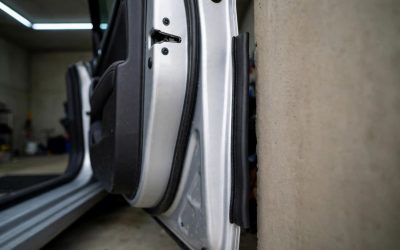
Worn door weatherstripping usually announces itself gradually: a whistle at highway speed, water pooling on the sill after rain, or dust creeping into a cabin that used to stay clean. The Seal Rubber weather stripping trim seal is a universal push-on replacement built for that job. It combines a metal-reinforced clip with a closed rubber loop, and it presses onto the edge of a car door so the loop can compress against the door sill and block water, air, and dust.
This review covers how the clip-and-loop design works, the published dimensions, which vehicles and door edges it suits, and where it falls short. Because this is a universal trim seal rather than a model-specific factory molding, the fit checks matter more than the badge.
As an Amazon Associate, we earn from qualifying purchases.
Quick Answer
The Seal Rubber trim seal is a push-on automotive weatherstrip that combines a metal-reinforced C-clip with a closed EPDM D-loop. It presses onto a door edge flange without adhesive, and the loop compresses against the sill to block water, air, and dust. It suits cars, trucks, and SUVs whose doors have a suitable mounting lip.
Key Specs
| Specification | Detail |
|---|---|
| Brand | Seal Rubber |
| Product type | Push-on automotive weather stripping trim seal |
| Seal profile | C-clip with closed D-loop |
| Material | EPDM rubber loop; vinyl and PVC trim body; internal steel clips |
| Color | Black |
| Clip depth | 0.5 inches |
| Clip opening | 0.06 inches |
| Loop diameter | 0.38 inches |
| Installation | Push-on; no adhesive required |
| Recommended uses | Car doors and windows on cars, trucks, and SUVs |
| Length | not stated |
| Model or part number | not stated |
| Item weight | not stated |
| Temperature rating | not stated |
| Warranty | not stated |
How the Clip and Loop Design Works
The seal is two parts working together. The C-clip is the mounting half: a trim body reinforced with internal steel clips that grip the edge of the door. Published dimensions put the clip at 0.5 inches deep with a narrow 0.06-inch opening, so it is made for thin sheet-metal flanges and door edges with an internal lip or ridge. You push it on by hand and the metal reinforcement holds it in place, with no adhesive to cure.
The D-loop is the sealing half: a closed loop of EPDM rubber, 0.38 inches in diameter, facing inward toward the cabin. When the door closes, the loop compresses between the door and the sill and forms the barrier that keeps out water, wind, and road dust. EPDM is the standard material for this job because it stays flexible and resists ozone and weather exposure.
Two practical points follow. First, length planning matters: published guidance for this seal puts a typical car door at roughly ten to twelve feet of material, and the length supplied with this specific listing is not stated in the sources checked, so confirm the roll length on the product page and measure your door perimeter before ordering. Second, because the clip opening is narrow, edge thickness is the make-or-break measurement: a flange that is too thick will not seat the clip.
Who It’s For and Who Should Skip It
This trim seal is for owners of cars, trucks, and SUVs whose factory door seals have cracked, flattened, or started leaking, and whose doors present the thin internal flange this clip is designed to grip. It is a sensible pick for someone who wants a seal that can be fitted without adhesive, repositioned during installation, or removed later without residue. It also works as a general edge seal around vehicle windows and similar flanged openings where the same clip geometry fits.
Skip it if your door has no suitable lip or ridge for the clip to bite onto; a flat surface needs an adhesive-backed strip instead. Skip it if you want an exact factory replacement molded for one specific model, because a universal seal will not reproduce model-specific corners and junctions. Also skip it if your door edge is thicker than the 0.06-inch clip opening, or if the leak is coming from a window run channel or a windshield gasket, which are different parts.
How It Compares With Typical Alternatives
The most common alternative is the adhesive-backed D-shape strip. Those stick to almost any clean surface and work on doors without a mounting flange, but they depend on surface preparation, install best in warm conditions, and are effectively permanent once bonded. This seal trades that stick-anywhere flexibility for a cleaner mechanical fit: nothing to cure, nothing to peel, but the door must have the right edge for the clip.
Vehicle-specific molded seals sit at the other end of the range. They reproduce the factory profile exactly, including corners, and are the safest choice for a restoration, but each one only fits the models it was molded for. A universal push-on seal like this one covers many vehicles with a single profile, at the cost of the buyer having to verify clip opening, loop diameter, and length.
Plain edge trim without a sealing loop is the third option. It protects sharp metal edges from chipping, but it does not compress against the sill, so it will not stop water or wind noise. If the problem is a leak or a whistle rather than a bare edge, the loop is the part that matters.
Frequently Asked Questions
Does this trim seal need adhesive to stay on?
No. Retention comes from the internal steel clips inside the C-clip, which grip the door edge as the seal is pushed on. There is no tape backing and nothing to cure, which also means the seal can be pulled off and refitted if the first attempt is not seated evenly.
What door edges does the clip fit?
The published clip dimensions are a 0.5-inch depth and a 0.06-inch opening, so the edge has to be a thin flange or lip close to that opening size. Measure the thickness of your door edge before ordering. Edges that are much thicker, heavily coated, or rounded may not let the clip seat fully.
How much material does one door need?
Published guidance for this seal suggests roughly ten to twelve feet for a typical car door, and larger doors can need more. The length supplied with this listing is not stated in the sources checked, so measure your door opening, confirm the roll length on the product page, and order with some spare.
Can it be used on windows as well as doors?
The product is listed for car doors and windows, and it can seal window-area edges that present the same kind of flange the clip is built for. It is not a substitute for a window run channel, which guides the glass itself, or for a windshield gasket. Match the part to the opening you actually need to seal.
Final Verdict
The Seal Rubber weather stripping trim seal is a well-thought-out universal door seal: an EPDM D-loop for the sealing work and a steel-reinforced push-on clip that needs no adhesive and leaves nothing behind if removed. Its limits are those of any universal part. The 0.06-inch clip opening restricts it to thin door flanges, and the length of this listing is not stated in published specs, so measuring your door and confirming the roll length first is essential. For a car, truck, or SUV with the right edge and a tired factory seal, it is a practical, reversible way to restore a watertight, airtight door closing.