Our Short List of 3
All 5 Picks at a Glance
| Product | Specs | Action |
|---|---|---|
 1. OMRON 10 Series BP7450 | Check price on Amazon | |
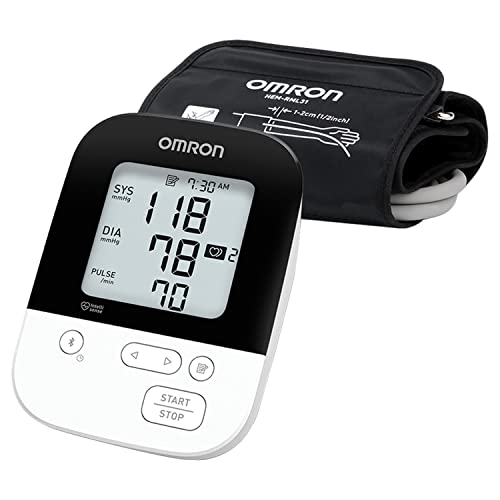 2. OMRON 5 Series BP7250 | Check price on Amazon | |
 3. OMRON Platinum BP5450 | Check price on Amazon | |
 4. OMRON Evolv BP7000 | Check price on Amazon | |
 5. Welch Allyn Home 1700 Series H-BP100SBP | Check price on Amazon |
Key takeaways
- Best desktop automated blood pressure monitors: five upper-arm automatic monitors with Bluetooth, wide cuffs and on-device memory for daily home use.
Disclosure: As an Amazon Associate, this site may earn from qualifying purchases made through links on this page.
Intro
A desktop automated blood pressure monitor sits on a table or desk while it works. The user slips on an upper-arm cuff, presses one button, and the monitor inflates the cuff, takes the reading, and shows the numbers on its display. No manual pumping, no stethoscope, and no separate gauge to read. That simple routine is why these monitors suit home use: the same steps, in the same place, at the same time of day.
This guide covers five upper-arm automatic monitors that fit on a desktop. All five use an upper-arm cuff rather than a wrist cuff, all five inflate and deflate on their own, and all five store readings so past numbers can be looked up later. They differ in cuff design, memory size, connectivity, and whether the monitor and cuff are one piece or two. Four come from OMRON, whose home monitor line covers the most common combinations of features, and one comes from Welch Allyn, a brand long used in clinical settings.
A note on use: follow the manual that ships with the monitor for cuff placement, arm position, and timing between readings. Sit with feet flat, rest the arm on the table at heart height, and avoid talking during the reading. Discuss the numbers with a clinician rather than interpreting them alone, and check the listing for the cuff size range before ordering, since a cuff that does not fit the arm will not give a useful reading.
At a Glance
- OMRON 10 Series BP7450 — Bluetooth, averaged readings, 200 readings for two users, and a pre-formed cuff that holds its shape.
- OMRON 5 Series BP7250 — Bluetooth, 60 readings for one user, and a wide-range D-ring cuff for arms from 9 to 17 inches.
- OMRON Platinum BP5450 — Bluetooth, 200 readings for two users, an AC adapter and storage case in the box, and AFib screening described on the listing.
- OMRON Evolv BP7000 — A one-piece wireless cuff with no separate monitor or tubes, 100 readings, and Bluetooth sync.
- Welch Allyn Home 1700 Series H-BP100SBP — SureBP technology, Bluetooth sync to a phone app, and a standard cuff covering 22 to 42 cm.
How to Choose
Start with the cuff. The cuff must fit the arm. Most cuffs in this guide cover arms from 9 to 17 inches, or 22 to 42 cm, which fits most adults. Measure the upper arm halfway between shoulder and elbow and compare with the range in the listing. A pre-formed cuff holds its shape and slides on with one hand, while a D-ring cuff wraps flat and adjusts to the arm. If the arm falls near the top of a range, pick the monitor with the wider cuff or the larger cuff option.
Decide how many people will use it. A monitor with two-user memory keeps each person’s readings separate, which matters in a household where two people track their numbers. A single-user monitor with 60 readings suits one person, while a two-user monitor with 200 readings suits a pair who both measure regularly. App sync adds unlimited storage on a phone, so on-device memory matters less when the app is used.
Look at the display. A dual backlit display with large digits is easier to read in a dim room, and a horizontal layout sits well on a desk. Some monitors show the last reading beside the current one, which helps when comparing numbers across days. If the monitor will sit on a bedside table, a backlit display is worth having.
Consider Bluetooth and the app. Bluetooth sync sends readings to a phone app, where they can be stored, charted, and shared with a clinician. The OMRON Connect app works with the four OMRON picks here, and the Welch Allyn monitor syncs to its own phone app. An app is optional: every monitor here works and stores readings without a phone. Pick Bluetooth when a phone log is wanted, and skip it when a simple on-device record is enough.
Check the power source. Most desktop monitors run on AA batteries, and the Platinum adds an AC adapter in the box for desk use without batteries. A one-piece cuff like the Evolv runs on batteries and travels easily. Keep spare batteries on hand, since a monitor with dead batteries gives no reading at all.
Look for averaging and irregular heartbeat features. Some monitors take three readings in a row and show the average, which smooths out variation between single readings. Some listings describe irregular heartbeat detection or AFib screening on every reading. These are features described on the listing, and the manual explains what the monitor shows when they appear. Treat any such notice as a prompt to discuss the numbers with a clinician.
The Picks
1. OMRON 10 Series BP7450
OMRON 10 Series Blood Pressure Monitor BP7450, Bluetooth Upper Arm
The 10 Series sits at the top of OMRON’s home range, and its headline feature is TruRead averaging: the monitor takes three readings in a row and shows the average, which smooths out the variation that comes with single readings. The display is a horizontally designed dual backlit LCD, so the numbers are easy to read on a desk in any light.
Memory covers 200 readings for two users, 100 each, with unlimited storage in the OMRON Connect app over Bluetooth. The cuff is the pre-formed Easy-Wrap ComFit cuff, which holds its shape and wraps the arm with one hand, fitting arms from 9 to 17 inches. The monitor runs on OMRON Advanced Accuracy technology, the maker’s name for its measurement system, and it works with the OMRON Health skill on Alexa-enabled devices.
This is the pick for a household where two people measure and where averaging matters. The pre-formed cuff suits users who find a flat wrap cuff fiddly, and the dual display suits a desk where the monitor is read at a glance. Keep the cuff clean and dry, and store the monitor on the desk where it will be used, so the routine stays consistent.
2. OMRON 5 Series BP7250
OMRON 5 Series Blood Pressure Monitor BP7250, Bluetooth Upper Arm
The 5 Series is the single-user pick in this group. It stores 60 readings for one user on the device and syncs to the OMRON Connect app over Bluetooth for unlimited storage on a phone. The cuff is a wide-range D-ring cuff that fits arms from 9 to 17 inches, and the monitor uses the same Advanced Accuracy technology as the 10 Series.
The D-ring cuff wraps flat around the arm and tightens through a metal ring, which gives a snug fit across the full size range. The monitor itself is compact, measuring about 4.2 by 6 by 3.4 inches, so it fits on a crowded desk or a bedside table without crowding out other items. One-button operation keeps the routine simple: wrap the cuff, press the button, and read the display.
This is the pick for one person who wants Bluetooth sync without paying for two-user memory or averaging. It suits a desk where space is tight and a routine where the phone app holds the long-term log. Confirm the cuff range against the arm measurement before ordering, since the D-ring cuff must close snugly to work as described.
3. OMRON Platinum BP5450
OMRON Platinum Blood Pressure Monitor BP5450, Bluetooth Upper Arm
The Platinum pairs a two-user memory with a complete desk kit. It stores 200 readings for two users, 100 each, and syncs to the OMRON Connect app over Bluetooth. The listing describes AFib screening on every reading and irregular heartbeat detection during measurement, and the manual explains what the monitor displays when those features engage.
The box includes a D-ring cuff, four AA batteries, an AC adapter, and a storage case. The AC adapter is the practical difference here: the monitor can stay plugged in on a desk, so there is no battery to run down mid-routine. The display is a high-contrast backlit dual LCD, and the monitor measures about 4.7 by 7.5 by 3.3 inches, a size that sits comfortably beside a lamp or a notebook.
This is the pick for a desk where the monitor stays in one place and gets used by two people. The AC adapter removes battery worries, the case keeps the cuff and monitor together when traveling, and the two-user memory keeps each person’s log separate. Follow the manual for cuff placement, and discuss any irregular heartbeat notice with a clinician.
4. OMRON Evolv BP7000
OMRON Evolv Blood Pressure Monitor BP7000, Wireless Upper Arm
The Evolv takes a different shape from the other picks: the monitor and cuff are one piece, with no separate unit and no tubes. The cuff wraps the upper arm, the display sits on the cuff itself, and the whole unit weighs about 8 ounces. Bluetooth syncs readings to the OMRON Connect app, and the device stores up to 100 readings on its own.
The one-piece design has two practical strengths. It travels easily, since there is no separate monitor to pack, and it sets up in seconds, since there are no tubes to connect. The cuff fits arms from 9 to 17 inches, and the monitor uses Advanced Accuracy technology. The trade-off is the display: it sits on the arm rather than on the desk, so the numbers are read by looking down at the cuff.
This is the pick for a monitor that moves between rooms or travels in a bag. It suits a single user who wants the simplest routine in this group, and it works as a second monitor for a household that already has a desk unit. Keep spare batteries in the case, since the one-piece design has no AC adapter option.
5. Welch Allyn Home 1700 Series H-BP100SBP
Welch Allyn Home 1700 Series Blood Pressure Monitor H-BP100SBP
The Welch Allyn 1700 Series brings a clinical brand into the home. The monitor uses SureBP technology and offers one-button operation, with readings described as ready in about 20 seconds. The standard cuff covers arms from 22 to 42 cm, and a larger cuff is available separately for arms above that range. Bluetooth syncs readings to the Welch Allyn Home phone app.
The monitor ships with the standard wide cuff and four AA batteries. The design is compact and plain, with a focus on the measurement rather than extra features: no on-device multi-user memory is described for this model, so the phone app holds the log. The brand is widely used in clinical settings, and the device appears on the US validated device listing for home monitors.
This is the pick for a household that wants a clinical brand and a simple one-button routine. It suits a desk where the phone app will hold the record, and it pairs well with a larger cuff when the standard cuff does not fit. Confirm the cuff size range on the listing before ordering, and follow the manual for arm position during a reading.
Comparison Table
| Monitor | Users and Memory | Cuff | Bluetooth | Power |
|---|---|---|---|---|
| OMRON 10 Series BP7450 | 2 users, 200 readings | Pre-formed, 9–17 in | Yes | Batteries |
| OMRON 5 Series BP7250 | 1 user, 60 readings | D-ring, 9–17 in | Yes | Batteries |
| OMRON Platinum BP5450 | 2 users, 200 readings | D-ring | Yes | Batteries + AC adapter |
| OMRON Evolv BP7000 | 1 user, 100 readings | One-piece, 9–17 in | Yes | Batteries |
| Welch Allyn 1700 H-BP100SBP | App-based log | Standard, 22–42 cm | Yes | 4 AA batteries |
Which One Fits Your Situation
For two people who both measure: the OMRON 10 Series BP7450 or the Platinum BP5450. Both store 200 readings across two users, and the 10 Series adds averaging while the Platinum adds an AC adapter and a case.
For one person on a budget of features: the OMRON 5 Series BP7250. Sixty readings, Bluetooth sync, and a wide-range D-ring cuff cover a single-user routine without extra features beyond what one user needs.
For a monitor that never leaves the desk: the OMRON Platinum BP5450. The AC adapter keeps it powered without batteries, and the storage case holds the kit together.
For travel or moving between rooms: the OMRON Evolv BP7000. One piece, no tubes, and 8 ounces make it the easiest monitor in this group to carry.
For a clinical brand with a simple routine: the Welch Allyn Home 1700 Series. One-button operation and SureBP technology suit a household that values a plain, focused device and a phone app log.
For arms above the standard range: check the larger cuff option. The Welch Allyn line lists an extra-large cuff separately, and the OMRON wide-range cuffs cover arms up to 17 inches. Measure the arm first, then pick the monitor whose cuff range covers the measurement with room to spare.
FAQ
What makes a monitor a desktop monitor?
A desktop monitor sits on a table or desk during a reading, with the cuff on the upper arm and the display at eye level or on the cuff. All five picks here are upper-arm automatic monitors designed for tabletop use at home, as opposed to wrist monitors or manual devices.
How do I pick the right cuff size?
Measure the upper arm halfway between shoulder and elbow, then compare with the range in the listing. Most cuffs here cover 9 to 17 inches, or 22 to 42 cm. A cuff that is too small or too large will not sit properly, so pick the monitor whose range covers the measurement with room to spare.
Do I need Bluetooth and an app?
No. Every monitor here stores readings on the device or works without a phone. Bluetooth adds a phone log that can be stored, charted, and shared with a clinician. Pick Bluetooth when a phone record is wanted, and skip it when an on-device record is enough.
How many readings should the monitor store?
It depends on how often readings are taken and by how many people. Sixty readings cover a month of twice-daily readings for one person. Two hundred readings cover two people measuring regularly for several weeks. App sync removes the limit entirely, since the phone holds the long-term log.
What does averaging do?
A monitor with averaging takes three readings in a row and shows the average, which smooths out the variation between single readings. The OMRON 10 Series BP7450 describes this TruRead averaging feature. Follow the manual for the timing between the three readings.
What should I do when the monitor shows an irregular heartbeat notice?
Follow the manual for what the display means, keep a note of when it appeared, and discuss it with a clinician. A notice from the monitor is not a diagnosis, and only a clinician can interpret it in context.
Final Take
A desktop automated monitor holds its place by making the routine easy enough to repeat: cuff on, one button, numbers on the display. The OMRON 10 Series covers two users with averaging, the 5 Series covers one user with Bluetooth, the Platinum adds a desk-ready AC adapter and case, the Evolv travels as a single piece, and the Welch Allyn 1700 brings a clinical brand to a simple one-button routine. Measure the arm, pick the cuff that fits, and choose the memory and power setup that matches how the monitor will be used. Then keep the monitor on the desk, follow the manual, and discuss the numbers with a clinician.