Key takeaways
- Find the best loppers for large branches, compare long-handled bypass and anvil picks with high cutting capacity, and choose the right tool for thick limbs.
The best loppers for large branches are long-handled bypass or anvil loppers with a cutting capacity of at least 1.75 inches, strong steel blades, and handles long enough to give you real leverage. If you are cutting live limbs, choose a bypass lopper. If you are clearing dry, dead wood, choose an anvil lopper. For most yards, the Fiskars PowerGear2 32-Inch Bypass Lopper is the strongest all-round pick, because it combines a 2-inch cutting capacity with geared leverage and a comfortable 32-inch reach.


Large branches are where hand pruners stop working. A hand pruner is made for stems and twigs, while a lopper is made for branches too thick to cut with one hand. The extra handle length is not just about reach. It is about leverage. Longer handles let you close the blades with less hand and arm force, and that matters when you are cutting dozens of branches in one session. A good lopper should cut cleanly in one smooth squeeze, without crushing the bark or twisting the blade.
This guide explains how to choose the best loppers for large branches and compares four proven models, covering live growth, dead wood, high limbs, and tight spaces.
Quick Picks
Our Short List of 3
All 4 Picks at a Glance
| Product | Specs | Action |
|---|---|---|
| Fiskars PowerGear2 32-Inch Bypass Lopper | Check price on Amazon | |
| TABOR TOOLS GG12A Anvil Lopper | Check price on Amazon | |
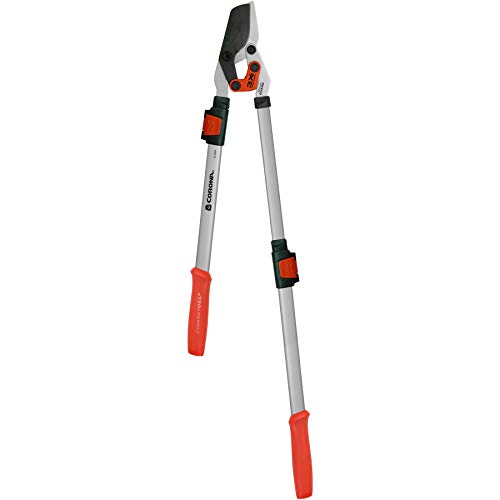 Corona SL 4364 DualLINK Extendable Bypass Lopper | Check price on Amazon | |
 TABOR TOOLS GG22A Telescopic Anvil Lopper | Check price on Amazon |
If you only buy one pair, start with the Fiskars PowerGear2. If your main job is clearing dead wood after a storm, the TABOR TOOLS GG12A is the better specialist. If you need extra reach for high branches, look at the two extendable models in the table above.
How to Choose
Choosing the best loppers for large branches starts with the branches themselves. Measure the thickest branch you plan to cut, note whether it is live or dead, and check how high it sits. Those three facts narrow the choice faster than any brand name.
Cutting Capacity
Cutting capacity is the maximum branch diameter the maker says the lopper can cut. For large branches, look for at least 1.75 inches, and prefer 2 inches when you regularly cut thick limbs. A lopper rated for 2 inches will cut a 1.5-inch branch with far less effort than a lopper rated for exactly 1.5 inches, because you are working well inside its limit rather than at the edge of it.
Do not try to force a lopper past its rated capacity. Forcing the handles can bend the blade, damage the pivot, and leave a ragged cut that heals slowly. If a branch is thicker than the rated capacity, step up to a pruning saw. A clean saw cut is always better than a crushed lopper cut on an oversized limb.
Bypass Versus Anvil Blades
Bypass loppers work like scissors. One sharp blade sweeps past a second blade, making a clean cut through live wood. They are the right choice for pruning living trees and shrubs, where a clean cut helps the plant heal. Anvil loppers work differently. A single straight blade closes down onto a flat metal plate, crushing through the branch. That action is strong on dry, dead, and woody stems, but it can crush live tissue and leave a rougher wound.
Match the blade to the wood. Use bypass blades for live branches you want the tree to keep growing from. Use anvil blades for dead branches, storm cleanup, and cutting woody stems down to size for disposal. Many gardeners eventually own one of each, because the two jobs are genuinely different.
Handle Length and Leverage
Handle length controls both reach and leverage. Longer handles give you more cutting force with the same hand effort, and they let you reach higher branches without a ladder for every cut. Handles in the 30 to 32 inch range suit most ground-level pruning. Extendable handles that reach 37 to 40 inches help with high limbs and dense shrubs, where a fixed handle cannot reach the branch.
Longer is not always better. Very long handles are heavier and harder to control in tight spaces, and they can be awkward inside a dense shrub. If you mostly prune at chest height, a 30-inch lopper is easier to handle than a 40-inch one. Choose the shortest handle that still reaches your branches and gives you enough leverage for the thickest cuts.
Geared and Compound Action
Geared and compound-action loppers use a linkage or gear system to multiply the force from your hands. The Fiskars PowerGear2, for example, uses a gear mechanism that increases cutting force in the middle of the cut, where the branch is hardest to get through. Compound-action models use a moving pivot to add leverage as the handles close.
This feature matters most on thick branches. A simple single-pivot lopper can cut a 1-inch branch easily, but a 2-inch branch needs far more force. A geared or compound-action head spreads that force more evenly and reduces strain on your hands, wrists, and shoulders. If you have limited hand strength, or you prune for long sessions, make this a priority.
Blade Material and Sharpness
Look for fully hardened steel blades with a low-friction or non-stick coating. Hardened steel holds an edge longer, and a low-friction coating helps the blade glide through sap and wet wood without sticking, while also resisting rust in a damp shed.
Check whether the blades are replaceable and can be sharpened. A sharp lopper cuts cleanly, while a dull one crushes, tears, and leaves the plant open to disease.
Weight and Comfort
Weight matters more than most buyers expect. A lopper that feels light in the store can feel heavy after an hour of overhead cutting. Models in this guide weigh roughly 2.5 to 4 pounds, with longer models at the top of that range.
Look for cushioned grips and shock-absorbing bumpers. Bumpers soften the jolt when the blades meet at the end of a cut, protecting your hands and wrists, and comfortable grips reduce blisters during long sessions.
Build Quality and Warranty
A lopper for large branches takes real force, so build quality matters. Steel or aluminium handles resist bending, a strong pivot bolt keeps the blades aligned, and a solid locking catch keeps the lopper closed in storage.
A long warranty is a useful sign of confidence from the maker. Several well-known lopper brands offer a full lifetime warranty covering defects in materials and workmanship. Keep your receipt and read the terms so you know what is covered.
The Best Loppers for Large Branches Reviewed
The four loppers below were chosen for cutting capacity, handle length, blade type, and track record on Amazon US. All four are full-size loppers, not hand pruners, rated for branches of at least 1.75 inches. Two are anvil models made for dead wood, and one is rated below 2 inches.
Fiskars PowerGear2 32-Inch Bypass Lopper
The Fiskars PowerGear2 32-Inch Bypass Lopper is the best overall pick in this guide. It is a 32-inch bypass lopper with a 2-inch cutting capacity, a precision-ground steel blade, and a patented gear mechanism that multiplies cutting force through the hardest part of the cut. The long aluminium handles give you strong leverage, while the bypass blade makes clean cuts on live growth.
This is the lopper to choose when most of your work is pruning living trees and shrubs. The 2-inch capacity covers the thickest branches most home gardeners face, and the gear mechanism makes those cuts feel easier than they would with a simple pivot lopper. The blade is fully hardened and coated to resist rust and reduce friction, and the handles include shock-absorbing bumpers that soften the end of each cut.
At around 2.55 pounds, it is light enough for long sessions, and the 32-inch length reaches into the centre of a shrub without forcing you to stretch. Fiskars backs this model with a full lifetime warranty, which is a strong sign of the build quality behind it. If you want one pair of loppers for large live branches, this is the pair to buy first.
TABOR TOOLS GG12A Anvil Lopper
The TABOR TOOLS GG12A is a 30-inch compound-action anvil lopper with a 2-inch cutting capacity, built for dry, dead, and woody branches. Its hardened carbon steel blade closes onto a flat anvil plate, and the compound-action linkage multiplies force so thick dead stems give way with a steady squeeze. The handles are 30 inches long, which gives good leverage without making the tool unwieldy in a crowded garden.
This is a specialist, not an all-rounder. Anvil blades crush as they cut, so they are not the right choice for live branches you want to heal cleanly. They are the right choice for storm cleanup, clearing dead limbs, cutting back old shrubs, and reducing woody stems to a size that fits in a green waste bin. If that is your main job, the GG12A is stronger and more direct than a bypass lopper of the same size.
The GG12A is also a good pick for gardeners who find bypass loppers struggle on hard, dry wood. Dry branches are brittle and resist a scissor cut, while an anvil blade drives straight through them. Keep the blade clean and dry after use, and store the lopper locked shut so the edge stays protected between jobs.
Corona SL 4364 DualLINK Extendable Bypass Lopper
The Corona SL 4364 is an extendable bypass lopper with DualLINK compound cutting action and ComfortGEL grips. Its steel handles extend from 27.5 inches to 37.5 inches, so you can shorten it for close work inside a shrub and lengthen it for high branches. The bypass blade cuts green or dry branches up to 1.75 inches in diameter, and the non-stick coating helps the blade stay sharp and glide through sap.
This is the best pick in this guide for reach. The extra length makes a real difference when a branch sits above your head or deep inside a hedge, and the extendable design means you do not need a second, longer lopper for those jobs. The DualLINK mechanism reduces cutting effort, and the ComfortGEL grips and ShockGUARD bumpers make long sessions more comfortable.
One fit note matters here. The SL 4364 is rated for 1.75 inches, not 2 inches, so it is a partial fit for the very thickest branches in this guide. If your branches regularly measure close to 2 inches, choose the Fiskars PowerGear2 instead. If your branches are mostly 1.5 inches or less, and reach is your main problem, the SL 4364 is an excellent choice.
TABOR TOOLS GG22A Telescopic Anvil Lopper
The TABOR TOOLS GG22A is a telescopic anvil lopper with compound action, a 2-inch cutting capacity, and handles that extend from 27 inches to 40 inches. It pairs the crushing power of an anvil blade with the longest reach in this guide, making it a strong choice for high dead limbs that are hard to reach with a fixed-handle lopper.
Use this lopper for dead and dry branches above head height, where a ladder would be awkward or unsafe for every cut. The telescopic handles let you adjust the length to the job, and the compound-action head adds leverage for thick, woody stems. The anvil design is the same as the GG12A, so the same fit warning applies: this tool is made for dead wood and cut-to-length work, not for clean pruning cuts on live growth.
The GG22A is heavier and longer than the fixed-handle models here, so it is less nimble inside a dense shrub. Treat it as a reach specialist rather than an everyday pruner. For low dead branches, the GG12A is easier to handle. For high dead branches, the GG22A earns its place in the shed.
What to Check Before You Buy
Before you buy the best loppers for large branches, check five things. First, measure the thickest branch you plan to cut, and choose a lopper rated at least a quarter inch above that size. Second, decide whether the branch is live or dead, and match the blade type to that answer. Third, check the handle length against the height of the branches, and consider an extendable model if you need reach. Fourth, check the weight and grip in your hands if you can, because a comfortable lopper gets used more often than a heavy one. Fifth, confirm that the listing matches the exact model you want, including the handle length, blade type, and cutting capacity, because similar-looking models often differ by half an inch of capacity.
Also check the care needs. Loppers last longer when cleaned after use, dried before storage, and kept locked shut in a dry place. Wipe sap from the blades, oil the pivot lightly when it feels stiff, and sharpen the blade when cuts start to tear instead of slice.
Think about safety as well. Wear gloves and eye protection when cutting large branches, especially dead wood, which can snap and fall without warning. Cut heavy branches in stages so the weight does not tear the bark, stand to the side rather than directly underneath, and never cut above your head with a tool that is too short. If a branch is near power lines, over a roof, or too large to control safely, call a professional tree service.
Finally, remember that a lopper is one tool in a pruning kit, not the whole kit. Hand pruners handle small stems, loppers handle large branches, and a pruning saw handles anything thicker than the lopper rating.
FAQ
What size loppers do I need for large branches?
For large branches, choose loppers with a cutting capacity of at least 1.75 inches, and prefer 2 inches if you regularly cut thick limbs. Handles of 30 to 32 inches suit most ground-level work, while extendable handles up to 37 or 40 inches help with high branches. Measure your thickest branch first, then choose a lopper rated above that size.
Are bypass or anvil loppers better for large branches?
Bypass loppers are better for large live branches, because their scissor action makes a clean cut that helps the plant heal. Anvil loppers are better for large dry or dead branches, because their crushing action drives through hard, brittle wood. Choose bypass for pruning living trees and shrubs, and anvil for clearing dead wood.
Can loppers cut branches 2 inches thick?
Yes, several full-size loppers are rated for branches 2 inches thick, including the Fiskars PowerGear2 and both TABOR TOOLS models in this guide. Cutting at the rated limit takes more effort than cutting a smaller branch, so a geared or compound-action lopper helps. For branches thicker than 2 inches, use a pruning saw instead.
How do I keep loppers sharp?
Clean the blades after each use, wipe away sap, and dry the tool before storage. Sharpen the blade with a file or sharpening stone when cuts start to tear, following the original bevel angle. Oil the pivot lightly when it feels stiff, and store the lopper locked shut in a dry place. A sharp blade cuts cleanly and puts less strain on your hands.
When should I use a pruning saw instead of loppers?
Use a pruning saw when a branch is thicker than your lopper rating, when the branch is too high to reach safely with a lopper, or when the cut needs to be made in a tight spot where the lopper handles cannot open fully. A saw also suits heavy branches that need to be cut in stages to control how they fall. Forcing a lopper past its limit risks a ragged cut and a damaged tool.
Bottom Line
The best loppers for large branches depend on the wood you cut most. For live branches up to 2 inches, the Fiskars PowerGear2 32-Inch Bypass Lopper is the strongest all-round choice, with geared leverage, a clean bypass cut, and a comfortable 32-inch reach. For dry, dead branches, the TABOR TOOLS GG12A is the better specialist, with a compound-action anvil head and the same 2-inch capacity. For high branches, the Corona SL 4364 adds extendable reach for live wood up to 1.75 inches, while the TABOR TOOLS GG22A adds the longest reach in this guide for high dead limbs.
Measure your thickest branch, match the blade to live or dead wood, and choose the shortest handle that still gives you enough leverage and reach. Keep it clean and sharp, and large-branch pruning will be faster, safer, and far less tiring.
Disclosure: As an Amazon Associate, we may earn from qualifying purchases.