Key takeaways
- Compare pellet carbon air purifiers with particle prefilters, deep granular carbon beds, and separate prefilter stages for gases, odors, and dust control.
Most purifiers that advertise carbon use a thin sheet or a light coating, and that media saturates quickly when cooking fumes, paint vapors, or cleaning chemicals keep entering the room. The real decision here is bed depth: loose pellet and granular activated carbon, measured in pounds or cubic inches, gives gases far more contact time and capacity than a carbon-dusted pad. A separate particle prefilter matters just as much, because dust and hair coat the pellets and shorten the life of the most expensive stage in the machine.

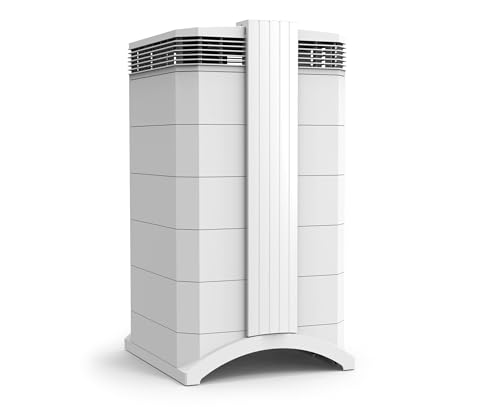
This guide is for buyers dealing with persistent odors, renovation fumes, wildfire smoke smells, or chemical sensitivity who have already found that ordinary HEPA towers barely touch the gas side of the problem. Every model below was selected from its Amazon listing, and each one pairs a genuine pellet or granular activated carbon stage with a dedicated particle prefilter stage. Names, filter stages, and specifications come from those product pages, so you can confirm the exact configuration before ordering.
Quick Picks
As an Amazon Associate we earn from qualifying purchases
| Product | Best for | Key spec from title |
|---|---|---|
| Austin Air HealthMate Plus | Large rooms with VOCs and formaldehyde concerns | Advanced 4-Stage Filtration with Activated Carbon & Zeolite |
| IQAir HealthPro Plus | Allergy-focused homes wanting Swiss-made filtration | Medical Grade HyperHEPA filter for home large room up to 1125 sq ft |
| IQAir GC MultiGas | Heavy gas and odor loads in one main room | Granular activated carbon cartridge set with impregnated alumina |
How to Choose
Confirm the Carbon Is Loose Pellet or Granular Media
Start by reading how the listing describes the carbon itself, not just whether the word carbon appears. Pellet and granular activated carbon sits loose in a canister, cartridge, or deep bed, and sellers of these machines usually state a weight or volume because that figure is the selling point. A listing that only mentions a carbon filter without any quantity is often describing a thin impregnated sheet. Compare the stated amounts across models, and treat a multi-pound bed as a different category from an unspecified pad, even when both use similar marketing language about odors.
Check That a Particle Prefilter Sits Ahead of the Carbon
Air should meet the particle prefilter before it reaches the carbon bed, and the listing should name that stage separately. Austin Air, for example, lists a large particle pre-filter and a medium particle pre-filter as the first two stages, while IQAir uses its PreMax filter ahead of the V5-Cell. This ordering keeps hair, lint, and coarse dust off the pellets, where buildup would block pores and waste adsorption capacity. Ask how the prefilter is reached and cleaned, because a buried prefilter that owners ignore will clog and starve the whole machine of airflow.
Match the Carbon Blend to Your Pollutant
Plain activated carbon handles many common odors and solvents, but blends change what a bed targets best. The HealthMate Plus adds potassium iodide impregnated carbon and zeolite, a combination its listing links to volatile organic compounds, formaldehyde, and benzenes. IQAir instead blends granular activated carbon with impregnated alumina in its gas cartridges. Neither blend is universally better; the right choice depends on whether your problem is traffic fumes, new furniture off-gassing, tobacco smoke, or workshop chemicals. Write down your main pollutant first, then pick the blend whose listing actually names it.
Plan Around Filter Size, Weight, and Replacement Rhythm
Deep carbon beds make heavy machines, and the filter itself becomes a long-term commitment rather than a small consumable. A combined Austin Air filter wraps hundreds of cubic inches of carbon around a large HEPA area, while IQAir splits its system into separate prefilter, gas, and particle filters that age on different schedules. Before buying, confirm the replacement filter name for your exact model and color variant, check where the unit will sit permanently, and consider who will lift it during filter changes. These practical details decide whether a powerful purifier stays in daily use.
The 3 Best Options
Austin Air HealthMate Plus
Households with a big open living space and a steady source of fumes, such as a busy kitchen, attached garage, or recently renovated rooms, fit this model well. Its listing describes a four-stage system built around volume rather than a coating, with two particle prefilter stages protecting a deep carbon and zeolite bed before the final HEPA stage. That layout suits buyers who want one substantial machine for a main room instead of several small units, and who prefer a set-and-run purifier without app controls or extra electronic features competing for attention.
Specs
- Brand: Austin Air
- Model Number: B450A1
- Filter Type: HEPA and Activated Carbon
- Stage 1: Large Particle Pre-filter, removes particles easily seen by the naked eye such as dust, hair and pet dander
- Stage 2: Medium Particle Pre-filter, removes small to medium size particles such as molds, spores and pollen
- Stage 3: Over 780 cubic inches of Activated Carbon, Potassium Iodide Impregnated Carbon and Zeolite
- Stage 4: 60 sq. ft. of True Medical Grade HEPA
Best for: Large bedrooms and living rooms where VOCs, formaldehyde, and everyday odors are the main complaint.
Watch out for: Confirm the color variant and B450 model code on the listing, since Austin Air sells several similar-looking HealthMate versions.
ASIN: B00GFZIFPQ
IQAir HealthPro Plus
Buyers whose priority is very fine particle control alongside real gas filtration should look closely at this Swiss-made tower. Its Amazon listing rates it for rooms up to 1125 sq ft and builds the system in three separate stages: a PreMax pre-filter that handles coarse and fine particulate matter first, a V5-Cell gas and odor filter using granular activated carbon, and a HyperHEPA stage last. Because each filter is separate, owners can replace only the stage that is spent. That suits allergy-focused homes that also cook heavily or live near traffic.
Specs
- Brand: IQAir
- Model Number: HealthPro Plus
- Maximum Coverage: Up to 1125 sq. ft.
- Stage 1: PreMax pre-filter for coarse and fine particulate matter
- Stage 2: V5-Cell gas and odor filter with granular activated carbon
- Stage 3: HyperHEPA filter
- Origin: Swiss Made
Best for: Allergy and asthma-conscious households that want separate, individually replaceable filter stages.
Watch out for: The three filters age on different schedules, so track each stage separately rather than assuming one replacement date.
ASIN: B002VXDCHW
IQAir GC MultiGas

When gases and odors clearly outweigh dust as the problem, this is the IQAir configuration built for that imbalance. Instead of one combined filter, its listing centers on a cartridge set of granular activated carbon and impregnated alumina, a format aimed squarely at chemicals, solvents, and strong smells rather than pollen alone. An H11 HEPA pre-filter stage handles particles ahead of the cartridges in the GC series configuration. Choose it for a workshop-adjacent room, a smoker’s space, or a home office near a busy road where fumes arrive daily and a standard combined filter would saturate early.
Specs
- Brand: IQAir
- Series: GC MultiGas
- Gas filter: Cartridge set of granular activated carbon and impregnated alumina
- Carbon media quantity listed: 12 lbs of granular activated carbon and impregnated alumina
- Pre-filter stage: H11 HEPA pre-filter in the GC series configuration
- Focus: Gas and odor filtration for medium to large rooms
Best for: Rooms with heavy chemical, smoke, or traffic-related odor loads that overwhelm ordinary carbon pads.
Watch out for: Verify the exact cartridge set for this model before ordering replacements, because IQAir sells different gas media for different series.
ASIN: B0077TBF9W
Which One Fits Your Situation
A Renovated Home Still Off-Gassing
New paint, flooring, and flat-pack furniture can release fumes for months, and a thin carbon sheet rarely keeps pace. The Austin Air HealthMate Plus fits this situation because its listing pairs over 780 cubic inches of activated carbon, potassium iodide impregnated carbon, and zeolite with two particle prefilter stages. Run it in the room where materials are newest, keep doors open for circulation, and expect the deep bed to handle the long tail of off-gassing better than a pad.
Allergies Plus Everyday Odors
Some homes need fine particle capture first and odor control second, without giving up either. The IQAir HealthPro Plus matches that mix: its PreMax pre-filter takes coarse and fine particles up front, the V5-Cell granular carbon stage works on gases and odors, and the HyperHEPA stage finishes the air. Separate filters also help here, because a dust-heavy home can change the prefilter more often while leaving the slower-aging stages in place until their own time comes.
A Workshop, Garage, or Smoker’s Room
Strong, repeated chemical exposure calls for the deepest gas stage you can place in the room. The IQAir GC MultiGas is the natural pick, since its cartridge set holds granular activated carbon with impregnated alumina and is designed around gas and odor removal rather than general dust duty. Position it near the source of the fumes, keep its H11 pre-filter stage from loading up with sawdust or ash, and the cartridges will spend their capacity on gases instead of debris.
One Main Room, Minimal Fuss
If you want a single machine that covers a primary living space without managing several different filter part numbers, the Austin Air HealthMate Plus keeps things simpler with its combined four-stage filter. Two built-in particle prefilter stages protect the carbon bed inside the same assembly, so maintenance means dealing with one filter unit. That simplicity suits renters and busy households who know a complicated multi-filter schedule would quietly slip, leaving a saturated bed running long past its useful life.
Common Mistakes
- Buying a purifier with a carbon-coated pad and expecting pellet-bed performance against strong fumes or smoke odors.
- Ignoring the particle prefilter until airflow drops, even though a clogged prefilter starves the carbon bed and the HEPA stage.
- Choosing a carbon blend that does not match the pollutant, such as plain carbon for a formaldehyde-heavy renovation.
- Placing the unit in a corner behind furniture, blocking the intake that the prefilter depends on.
- Ordering a replacement filter by brand name alone without matching the exact model code and variant on the listing.
Frequently Asked Questions
Why does pellet carbon outperform a thin carbon sheet?
Loose pellet and granular carbon gives air a much deeper bed to pass through, so gases spend more time in contact with the media and the total adsorption capacity is far larger. A thin sheet can help with mild, occasional smells, but it saturates quickly under steady fumes. Pellet beds also pair with a particle prefilter that keeps dust from coating the media and wasting that capacity early.
What does the particle prefilter actually protect?
The prefilter catches hair, lint, coarse dust, and larger pollen before air reaches the carbon bed and the fine particle filter. Without it, debris coats the pellets, blocks their pores, and forces the expensive stages to do coarse work they were not designed for. Keeping the prefilter clean preserves airflow, which is what allows the carbon stage to treat the full volume of room air passing through the machine.
How do I know when the carbon bed is spent?
Carbon does not usually show visible wear, so the clearest sign is returning odor: smells that the machine once controlled start lingering again even on higher fan settings. Note when you installed the filter and what the listing or manual suggests for its service interval under your conditions. Heavy smoke or chemical exposure shortens that interval considerably, so a calendar note beats guessing when performance quietly fades.
Can one of these machines handle a whole house?
These are single-room machines, even when a listing states a large maximum coverage figure. Doors, hallways, and separate floors all restrict how much air passes through the unit, so real coverage is the room where it sits plus whatever connected space stays open to it. Most owners place the deepest carbon bed in the room with the strongest source, then judge results there before considering a second unit elsewhere.