Key takeaways
- The best 88 key arranger keyboards for home accompaniment pair full-size weighted keys with built-in backing bands, rich piano sound, and room-filling speakers.
Introduction
The best 88 key arranger keyboards for home accompaniment solve a familiar problem for home players: you want the sound of a full band behind you, but you do not have a band, a studio, or a spare room full of gear. An arranger keyboard supplies that backing band by itself. Play chords with your left hand and melody with your right, and the instrument adds bass, drums, guitar, strings, and other parts in the style you choose, from a gentle ballad to a swinging jazz combo or a driving pop groove. When the keyboard also has a full 88-note range, you can move freely between piano pieces and popular songs without running out of keys at either end of the keyboard.
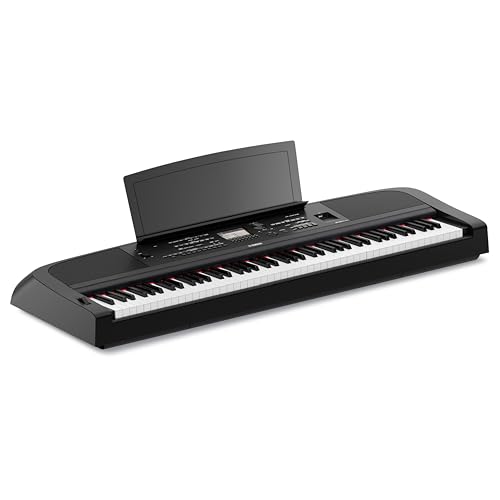

That combination matters most at home, where one instrument usually has to do several jobs. It should sound convincing as a piano for practice, feel natural under the fingers, fill a living room without extra speakers, and stay simple enough that you can sit down and play a song without reading a manual first. A dedicated arranger with fewer keys can offer more styles, but it cannot match the piano feel and range of a full-size weighted keyboard. A plain digital piano, on the other hand, gives you the keys and the piano sound but leaves the accompaniment to you.
This guide focuses on full-size 88-key instruments with built-in accompaniment features that suit relaxed home playing. The two models covered here are the black and white finishes of the same well-regarded Yamaha instrument, the DGX-670, which pairs a graded hammer-action keyboard with a large style library, a colour display, and a microphone input for singing along. Because only this model could be verified against Amazon US listings with a corroborated ASIN, this guide covers it in depth in both finishes rather than listing models that could not be confirmed.
At a Glance
| Product | Best for | Key spec |
|---|---|---|
| Yamaha DGX-670B (Black) | Piano-first home playing with accompaniment | 88 GHS weighted keys, 630 voices, 263 styles |
| Yamaha DGX-670WH (White) | The same instrument in a lighter finish | 88 GHS weighted keys, 630 voices, 263 styles |
How to Choose an 88-Key Arranger Keyboard for Home Accompaniment
Key action comes first
Key action shapes every minute you spend at the instrument, so it deserves the most attention. A graded hammer-action keyboard feels heavier in the bass and lighter in the treble, much like an acoustic piano, and it helps build proper finger technique when you practise piano pieces as well as songs with backing. Semi-weighted and unweighted keys are lighter and faster for organ and synth sounds, but they feel less convincing for piano repertoire. If the keyboard will be your main piano as well as your arranger, choose a hammer-action model with a matte key surface, which keeps fingers from slipping during longer sessions. Touch response settings also matter: several sensitivity levels let you match the keyboard to a light or firm playing style.
Look closely at the accompaniment section
The accompaniment section is what turns a digital piano into an arranger, so check how its styles work in practice. Count the styles, but also check how they are organised: intros, main variations, fills, and endings should be easy to reach while you play, ideally from clearly labelled panel buttons rather than deep menus. A feature that adapts the backing to your playing in real time is especially useful at home, because it makes the band follow your dynamics instead of marching along at a fixed pattern. Simple chord modes are worth having too, since they let beginners play full arrangements with one or two fingers in the left hand while they learn fuller chord shapes.
Sound variety beyond the piano
A home arranger earns its place by covering many kinds of music. Start with the piano sound itself: it should be sampled from a respected concert grand, with natural resonance and a clear tone across soft and loud playing. Then check the rest of the library, including electric pianos, organs, strings, brass, guitars, choirs, and drums. A voice count in the hundreds usually means you will find a convincing sound for almost any song, while a small library forces compromises. Built-in effects such as reverb and chorus add polish, and a dedicated microphone input with its own effects turns the keyboard into a complete setup for singing along at home.
Speakers, size, and the room it will live in
Built-in speakers decide whether the instrument works on its own in a living room. Two speakers with a reasonable amplifier rating fill a normal room at comfortable volume, and a headphone jack keeps late-night practice polite. Before buying, measure the space where the keyboard will sit: a full-size 88-key instrument is roughly 55 inches wide and about 17 inches deep, and it needs a sturdy stand. Some models include a furniture stand and a three-pedal unit, while others sell them separately, so check what is in the box. Weight matters too if the keyboard will move between rooms or be packed away after playing; a model near 47 pounds is portable in the sense that one person can carry it, but it is not something you will want to lift up and down stairs every day.
Connections for lessons, recording, and streaming
Modern home keyboards connect to the rest of your musical life. A USB connection to a computer supports MIDI and audio recording, which is useful if you want to record songs or use lesson software. Bluetooth audio lets you stream songs from a phone or tablet through the built-in speakers and play along, while Bluetooth MIDI links the keyboard to music apps without cables. A score display on the instrument itself can show notation for built-in songs, which helps when you are learning a new piece. If you plan to sing, confirm the microphone input is a standard quarter-inch jack with adjustable effects, since that determines whether your existing microphone will work.
The Picks
Yamaha DGX-670B (Black)
The Yamaha DGX-670B is a piano-first instrument that also works well as a home arranger, and the black finish is the version most often seen in living rooms and home studios. Its 88-key Graded Hammer Standard keyboard uses matte black keytops and a heavier feel in the bass that lightens toward the treble, giving piano pieces a natural touch. The piano sound comes from Yamaha’s CFX concert grand, sampled in stereo and shaped with Virtual Resonance Modeling, so sustained chords bloom the way they do on an acoustic grand. With 256-note polyphony, even dense arrangements with the sustain pedal held down keep every note sounding.
The arranger side is built around 263 accompaniment styles, including pro, session, and pianist styles, each with four One Touch Settings that call up a matching voice and effects for instant playing. Adaptive Style shifts between main variations based on how you play, and Smart Chord lets you trigger full chords with a single finger, which makes the instrument approachable for players who are still learning harmony. The library holds 630 voices in total, covering pianos, electric pianos, organs, strings, brass, and drums, plus 29 drum and sound-effect kits.
A 4.3-inch colour display shows the score for built-in songs, lyrics, and style controls, while Bluetooth audio streams music from a phone or tablet through the built-in speakers. A microphone input with studio-quality effects supports singing along, and USB connections handle MIDI and audio with a computer. The built-in speaker system uses two 12-watt amplifiers driving two 12-centimetre speakers, which is enough to fill a living room at normal playing volume. In the box you get a music rest, a sustain footswitch, and the power adapter; a furniture stand and three-pedal unit are sold separately, so budget for those if you want a permanent setup. The instrument measures about 55 by 17.5 by 6 inches and weighs about 47 pounds, so it needs a sturdy stand and a settled spot rather than a shelf that gets cleared each evening.
Key specs
– Keys: 88, Graded Hammer Standard action with matte black keytops
– Voices: 630, including CFX grand piano, plus 29 drum and sound-effect kits
– Styles: 263 accompaniment styles with Adaptive Style and Smart Chord
– Polyphony: 256 notes
– Display: 4.3-inch colour TFT display with score and lyrics view
– Speakers: 12 W x 2 amplifiers, 12 cm x 2 speakers
– Connections: microphone input, Bluetooth audio, USB to host and device, headphone jack
– Dimensions: about 55 x 17.5 x 6 inches; weight about 47 lb 3 oz
– Included: music rest, sustain footswitch, power adapter
Pros
– Authentic graded hammer action and convincing CFX grand piano sound
– Large style library with adaptive accompaniment that follows your playing
– Microphone input and Bluetooth audio for singing and playing along
– Colour score display is helpful when learning new songs
– 256-note polyphony handles dense arrangements without dropped notes
Cons
– Furniture stand and three-pedal unit are sold separately
– At about 47 pounds, it is not a keyboard you will move every day
– Style library is smaller than a dedicated flagship arranger
Yamaha DGX-670WH (White)
The Yamaha DGX-670WH is the same instrument as the black model above, finished in white, and it suits homes where a lighter-coloured instrument fits the room better. Everything about the playing experience is identical: the same 88-key Graded Hammer Standard keyboard with matte keytops, the same CFX concert grand piano sound with Virtual Resonance Modeling, the same 630 voices, and the same 263 accompaniment styles with Adaptive Style and Smart Chord. The choice between the two finishes is therefore a matter of the room and your taste rather than sound or features, which makes the decision simpler: pick the colour that looks right where the keyboard will live.
In a bright living room or a bedroom with light furniture, the white finish blends in more easily than black, and it shows dust less obviously between cleanings. It also photographs well for players who record videos of their playing at home. The same practical points apply as with the black model. You still get the 4.3-inch colour display with score and lyrics, the microphone input with effects, Bluetooth audio for streaming songs from a phone or tablet, and USB connections for MIDI and audio work with a computer. The built-in speaker system, with two 12-watt amplifiers and two 12-centimetre speakers, fills a living room without extra gear, and the headphone jack covers quiet practice.
The white model ships with the same accessories: a music rest, a sustain footswitch, and the power adapter, while the matching furniture stand and three-pedal unit remain separate purchases. Its dimensions and weight match the black version at about 55 by 17.5 by 6 inches and about 47 pounds, so it needs the same sturdy stand and the same settled spot in the room. If you already own a stand from an earlier keyboard, check its width and weight rating before ordering, since a full-size 88-key instrument needs more support than a compact 61-key model.
Key specs
– Keys: 88, Graded Hammer Standard action with matte black keytops
– Voices: 630, including CFX grand piano, plus 29 drum and sound-effect kits
– Styles: 263 accompaniment styles with Adaptive Style and Smart Chord
– Polyphony: 256 notes
– Display: 4.3-inch colour TFT display with score and lyrics view
– Speakers: 12 W x 2 amplifiers, 12 cm x 2 speakers
– Connections: microphone input, Bluetooth audio, USB to host and device, headphone jack
– Dimensions: about 55 x 17.5 x 6 inches; weight about 47 lb 3 oz
– Included: music rest, sustain footswitch, power adapter
Pros
– Identical sound, action, and features to the black model
– White finish suits bright rooms and light-coloured furniture
– Same large style library and adaptive accompaniment
– Microphone input and Bluetooth audio included
– Colour display with score view helps when learning songs
Cons
– Same limitations as the black model: stand and pedals sold separately
– White finish may show scuffs and marks more readily over time
– No feature advantage over the black version, so the choice is purely cosmetic
Comparison: Which One Fits You
Because both models in this guide are the same instrument in different finishes, the comparison is refreshingly simple. Sound, key action, styles, speakers, connections, weight, and included accessories are identical between the black and white DGX-670. If your room has dark furniture, a black piano bench, and a traditional look, the black model disappears into the setting and looks like a piece of furniture. If your room is bright, with light wood, white walls, or a modern feel, the white model looks intentional rather than bulky.
The more useful question is whether the DGX-670 itself fits your home playing. Choose it if piano sound and touch come first and accompaniment is the bonus that makes practice fun: its graded hammer action, CFX piano voice, and 256-note polyphony are stronger than those of most dedicated arrangers with unweighted keys. Accept its trade-offs with open eyes: the style library, while generous at 263 styles, is smaller than a flagship arranger, and you will need to buy a stand and possibly a three-pedal unit to complete the setup. For relaxed home accompaniment, singing along, and playing piano pieces with a backing band, it covers the brief well in either colour.
FAQ
Do I need 88 keys for home accompaniment?
Yes, if you also play piano pieces. A full 88-note range lets you play low bass notes and high melody notes without shifting octaves, and it matches the layout of an acoustic piano. If you only play songs with backing and never touch piano repertoire, a smaller arranger can work, but you will miss the range sooner or later.
Is a built-in speaker system enough for a living room?
For most home playing, yes. The models here have built-in speakers that fill a living room or bedroom at normal playing volume. Headphones are useful for late-night practice, and an audio output lets you connect to a larger speaker system if you ever want more volume.
Can I use these keyboards with a tablet or computer?
Yes. The DGX-670 includes USB MIDI and audio connections for a computer, plus Bluetooth MIDI and Bluetooth audio for tablets and phones. That covers lesson apps, backing tracks, notation software, and recording.
Which finish should I choose, black or white?
Choose based on the room. Black suits traditional rooms and dark furniture; white suits bright, modern rooms and light furniture. The sound, action, and features are identical, so there is no musical reason to prefer one over the other.
Do these keyboards include a stand?
No. A music rest, sustain footswitch, and power adapter are included, but the furniture stand and three-pedal unit are sold separately. Check the listing and confirm which accessories are included before ordering, since bundle listings sometimes add a stand.
Can I sing along while I play?
Yes. The DGX-670 has a microphone input with its own effects, so you can plug in a microphone and hear your voice through the built-in speakers along with the keyboard and accompaniment.
Conclusion
The best 88 key arranger keyboards for home accompaniment combine a full piano keyboard with a backing band in one instrument, and the Yamaha DGX-670 does that combination well in either finish. Its graded hammer action and CFX grand piano sound make it a satisfying piano for daily practice, while its 263 styles, Adaptive Style, and Smart Chord features turn a quiet evening into a full arrangement with very little setup. The built-in speakers, colour score display, microphone input, and Bluetooth audio cover the everyday needs of home playing without extra boxes and cables. Pick the black model for a traditional room or the white model for a bright one, add a sturdy stand, and the instrument is ready to become the musical centre of the house.
Disclosure: As an Amazon Associate, we earn from qualifying purchases.