Our Short List of 3
All 4 Picks at a Glance
| Product | Specs | Action |
|---|---|---|
 2. Amazon Basics AA, 48-Pack | Check price on Amazon | |
 3. Energizer MAX AA, 48-Pack | Check price on Amazon | |
 4. KODAK Xtralife AA, 60-Pack | Check price on Amazon | |
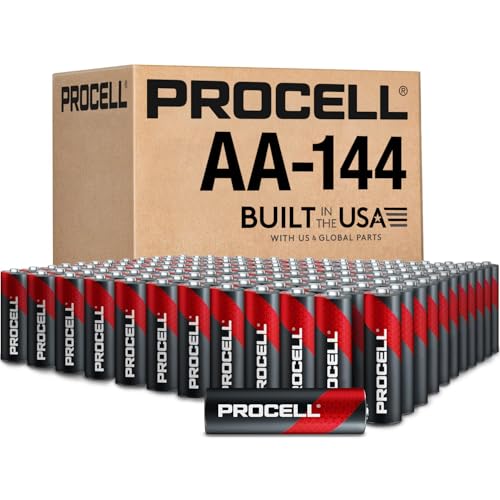 5. Procell AA, 144-Pack | Check price on Amazon |
Key takeaways
- Best battery supplier guide: five AA alkaline packs from Duracell, Amazon Basics, Energizer, KODAK and Procell, one pack per supplier, with shelf life compared.
Disclosure: As an Amazon Associate, this site may earn from qualifying purchases made through links on this page.
Intro
A battery supplier is the company behind the battery: the maker whose name is on the pack, whose chemistry fills the cell, and whose warranty stands behind it. When you search for the best battery supplier, you are really asking which makers you can trust to put a fresh, long-lasting cell in your remote, your flashlight, your clock, or your medical device, time after time.
This guide answers that question with AA alkaline batteries, the most widely used household cell. It compares five packs, one from each of five leading suppliers: Duracell, Amazon Basics, Energizer, KODAK, and Procell. Each pick is a pack of AA alkaline cells, so the comparison stays on the supplier, not on the chemistry or the size. Pack sizes run from 24 to 144 cells, and shelf lives run from 10 to 12 years where the listing publishes a figure.
Why AA alkaline, and why one pack per supplier? AA alkaline cells are ready to use the moment you open the pack, they need no charger, they hold their charge for years on a shelf, and they fit the largest number of household devices. Comparing one pack per supplier keeps the guide honest: the same cell size, the same chemistry, and the differences that remain are the ones that belong to the supplier, such as pack size, shelf life, published capacity, and the use the supplier designs the cell for.
A note on honesty about sources: the details in this guide come from maker listings and published specifications. No practical measurement is claimed here. Where a listing does not publish a figure, the guide says so rather than filling the gap with a guess.
At a Glance
- Duracell Coppertop AA, 24-Pack — the household standard, with a 12-year shelf life.
- Amazon Basics AA, 48-Pack — the only pick here with a published capacity figure, 2875 mAh, and a 10-year shelf life.
- Energizer MAX AA, 48-Pack — the maker’s longest-lasting MAX line, in a 48-pack.
- KODAK Xtralife AA, 60-Pack — a 60-pack with a 10-year shelf life and a leak-resistant design.
- Procell AA, 144-Pack — the bulk professional pick, made in the USA, with a 12-year shelf life.
How to Choose
Pack size: match the pack to the household
Count the AA devices in your home before you buy. A home with a few remotes, a clock, and a flashlight uses a 24-pack across a year or more. A home with children, game controllers, toys, and a drawer of gadgets uses a 48-pack or a 60-pack without waste. A facility, an office, a school, or a household that stocks for emergencies uses a 144-pack and stops thinking about batteries for a long time.
Bigger is not automatically better. A pack that sits open for years still ages, even with a 10- or 12-year shelf life. Buy the size you will use while the cells are fresh, and store the rest sealed, cool, and dry.
Shelf life: 10 years or 12 years
Shelf life is the headline figure for an alkaline cell, because most AA cells spend most of their life waiting in a drawer. Duracell and Procell list 12 years. Amazon Basics and KODAK list 10 years. Energizer does not publish a shelf-life figure on the listing used for this guide, so the guide states that plainly instead of guessing.
Two years of shelf life matter when you stock for emergencies or buy in bulk. A 12-year cell bought today is still fresh when a child who is now small is grown. A 10-year cell is still a long time by any household measure. Either figure beats the life of the device the cell will power.
Published capacity: only one pick states a number
Capacity, measured in milliampere-hours (mAh), states how much charge a cell holds. Only one pick in this guide publishes a capacity figure: Amazon Basics lists 2875 mAh for its AA cell. The other suppliers do not publish a capacity figure on the listings used here, and the guide does not invent one for them.
That gap is normal for alkaline cells. Makers of alkaline AA cells usually describe longevity in use rather than in milliampere-hours, because an alkaline cell gives different runtimes in different devices. A high-drain device such as a camera flash or a motorized toy drains a cell in hours, while a low-drain device such as a wall clock runs for months on the same cell. Judge an alkaline supplier on shelf life, leak resistance, and the devices the supplier designs the cell for, rather than on a single capacity number.
Leak resistance
A leaking alkaline cell ruins a remote, a toy, or a flashlight, and the damage usually appears in the device you forgot about in a drawer. KODAK lists a leak-resistant design for its Xtralife cells. Duracell and Energizer build their cells with seals designed to hold up over a long shelf life. The practical habit matters as much as the design: take batteries out of a device you will not use for months, store cells in their original packaging, and check the drawer once a season for any cell that looks swollen or damp.
High-drain or low-drain devices
A high-drain device draws a large current in bursts: a camera flash, a motorized toy, a game controller with vibration. A low-drain device sips current for months: a wall clock, a remote, a smoke alarm. Alkaline AA cells handle both, but the supplier matters more in high-drain use, where a weak cell fades fast. Duracell positions its Coppertop with Power Boost ingredients for lasting power, Energizer positions its MAX line as its longest-lasting alkaline, and Procell designs its cells for professional and medical devices that must work every time. For low-drain use, any of the five picks serves well, and pack size and shelf life decide.
Bulk and professional use
Procell exists for a different buyer: a facility that powers medical devices, safety equipment, or a fleet of remotes and sensors. The 144-pack, the made-in-USA label, and the GSA and Buy American readiness all speak to that buyer. A household can buy it too, and the 12-year shelf life makes a bulk pack sensible, but the pack is built for a stockroom shelf rather than a kitchen drawer.
The Picks
1. Duracell Coppertop AA, 24-Pack
View the Duracell Coppertop AA 24-Pack on Amazon
Duracell Coppertop is the household standard against which other AA cells are measured, and this 24-pack is the size most homes actually use. The listing states a 12-year shelf life, the longest figure in this guide, and Power Boost ingredients in the cell. Twenty-four cells cover a year of remotes, clocks, flashlights, and toys in a typical home, with spares for the drawer.
Duracell is the supplier to take when you want the safe, widely available choice and you do not want to think about batteries again for a year. The 24-pack is also the smallest pack in this guide, which suits a small household, a first home, or a buyer who prefers fresh packs over a large stock.
What to know: the listing does not publish a capacity figure in milliampere-hours, so the guide does not state one. Alkaline cells in cold weather give less runtime than at room temperature, which is true of every pick here. Keep a spare pack sealed for emergencies rather than opening every pack at once.
2. Amazon Basics AA, 48-Pack
View the Amazon Basics AA 48-Pack on Amazon
Amazon Basics is the only supplier in this guide that publishes a capacity figure for its AA cell: 2875 mAh. That number gives you a concrete way to compare the cell against other cells that publish the same figure, and it is the highest published capacity detail in this lineup. The listing also states a 10-year shelf life, a 1.5V output, and a 48-pack that suits a busy household.
Note a catalog detail on this listing: one detail field reads 12.0-volt, which is an error in the listing catalog. An AA cell is 1.5V, and the listing bullet text states 1.5V. This guide follows the bullet text and the standard AA voltage, and the 12.0-volt field should be ignored.
What to know: Amazon Basics cells are not rechargeable, so do not put them in a charger. The 48-pack suits a home with game controllers, toys, and a full set of remotes. If you need a published capacity figure to compare suppliers, this is the only pick here that gives you one.
3. Energizer MAX AA, 48-Pack
View the Energizer MAX AA 48-Pack on Amazon
Energizer MAX is the maker’s longest-lasting alkaline line, and this 48-pack is the supplier’s answer to a household that burns through AA cells. The MAX line sits above the maker’s standard alkaline in the lineup, and the maker positions it for demanding devices that draw hard and often, such as game controllers, motorized toys, and flashlights used daily.
The 48-pack matches the Amazon Basics pack in size, so the choice between the two comes down to the supplier: Energizer for the longest-lasting MAX line and a maker with a long history in alkaline cells, Amazon Basics for the published 2875 mAh capacity figure. Both packs serve the same busy household.
What to know: the listing used for this guide does not publish a capacity figure or a shelf-life figure for this pack, so the guide states neither. That is a gap in the listing, not in the cell. If a published shelf-life figure matters to you, the Duracell and Procell picks list 12 years and the Amazon Basics and KODAK picks list 10 years.
4. KODAK Xtralife AA, 60-Pack
View the KODAK Xtralife AA 60-Pack on Amazon
KODAK Xtralife is the 60-pack of this guide, and the pick for a household that wants more cells than a 48-pack without stepping up to a bulk 144-pack. The cells are LR6, the standard AA alkaline designation, at 1.5V, with a listed 10-year shelf life and a leak-resistant design. Sixty cells cover a large household, a home with children and many battery-powered toys, or a small office with a drawer of remotes and wireless mice.
The leak-resistant design is the detail that sets this pick apart on paper. A cell that resists leaking protects the device it sits in, and that protection matters most in devices that hold cells for months between uses, such as a clock, a remote, or a flashlight in a drawer.
What to know: the listing does not publish a capacity figure in milliampere-hours, so the guide does not state one. The 60-pack is an odd size between the common 48-pack and the bulk 144-pack, which is exactly why it fits a large household: enough cells to stop counting, without a stockroom quantity.
5. Procell AA, 144-Pack
View the Procell AA 144-Pack on Amazon
Procell is the professional supplier in this guide, and its 144-pack is the bulk buy. The cells are made in the USA, list a 12-year shelf life, and are designed for professional and medical devices, where a dead battery is not an inconvenience but a failure. The listing states GSA and Buy American readiness, which matters for institutional buyers.
One hundred forty-four cells is a facility quantity: a hospital floor, a school, a hotel, an office building, or a household that stocks for emergencies and for every remote, sensor, and flashlight it owns. The 12-year shelf life makes that quantity sensible, because the last cell in the box is still fresh years after the first one is used.
What to know: a 144-pack is too many cells for a small household to use before the box ages, even with a 12-year shelf life. Buy it when you have the devices to feed it, or when you stock for a facility. The listing does not publish a capacity figure in milliampere-hours, so the guide does not state one.
Comparison Table
| Pick | Supplier | Pack Size | Voltage | Shelf Life | Published Capacity |
|---|---|---|---|---|---|
| Duracell Coppertop AA | Duracell | 24 | 1.5V | 12 years | Not published |
| Amazon Basics AA | Amazon Basics | 48 | 1.5V | 10 years | 2875 mAh |
| Energizer MAX AA | Energizer | 48 | 1.5V | Not published | Not published |
| KODAK Xtralife AA | KODAK | 60 | 1.5V | 10 years | Not published |
| Procell AA | Procell | 144 | 1.5V | 12 years | Not published |
Which One Fits Your Situation
A typical home with a few remotes, a clock, and a flashlight. Take the Duracell Coppertop 24-pack. Twenty-four cells last a year or more, the 12-year shelf life covers emergency spares, and the supplier is the household standard.
A busy household with game controllers, toys, and many remotes. Take the Amazon Basics 48-pack or the Energizer MAX 48-pack. The Amazon Basics pick gives you the only published capacity figure in this guide, 2875 mAh, while the Energizer MAX pick gives you the maker’s longest-lasting alkaline line. Either 48-pack fits the same household.
A large household or a small office that wants more than 48 cells. Take the KODAK Xtralife 60-pack. Sixty cells, a 10-year shelf life, and a leak-resistant design cover a full drawer of devices without stepping up to a bulk quantity.
A facility, a medical setting, or an emergency stockpile. Take the Procell 144-pack. Made in the USA, built for professional and medical devices, with a 12-year shelf life and GSA and Buy American readiness, it is the supplier for buyers who need a cell to work every time.
You compare suppliers on published numbers. Take the Amazon Basics 48-pack. It is the only pick here with a published capacity figure, so it is the only one you can compare milliampere-hour to milliampere-hour against other cells that publish the same figure.
FAQ
What does battery supplier mean in this guide?
It means the maker behind the battery. Each pick in this guide is a pack of AA alkaline cells from a different supplier: Duracell, Amazon Basics, Energizer, KODAK, and Procell. The cells are the same size and the same chemistry, so the differences between the picks are the differences between the suppliers: pack size, shelf life, published capacity, and the use each supplier designs the cell for.
Are store-brand batteries as good as name-brand batteries?
That depends on what you measure. Amazon Basics publishes a capacity figure, 2875 mAh, that the name brands in this guide do not publish, and it lists a 10-year shelf life against 12 years for Duracell and Procell. For low-drain devices such as remotes and clocks, any of the five picks serves well. For high-drain devices and for professional use, the supplier’s design and the device’s demands matter more than the name on the pack.
Can I mix battery brands in the same device?
No. Use cells from the same supplier, the same pack, and the same age in one device. A mixed set discharges unevenly, the weakest cell fades first, and the device may stop working while other cells still hold charge. Replace all the cells in a device at the same time, with cells from the same pack.
How should I store AA batteries?
Keep them sealed in their original packaging, in a cool, dry place, away from metal objects such as keys and coins. Do not store loose cells in a drawer where they can touch each other or metal, because a short circuit can heat a cell. Do not store cells in a hot garage or a damp basement. Take cells out of a device you will not use for months.
Are alkaline batteries rechargeable?
No. Alkaline AA cells are single-use. Do not put them in a charger, because charging an alkaline cell can leak, heat, or burst the cell. When an alkaline cell is empty, recycle it where your area accepts household batteries, and replace it with a fresh cell. If you want rechargeable AA cells, buy NiMH or NiCd cells and a charger built for that chemistry.
Final Take
Five suppliers, one cell size, one chemistry, and the differences are the ones that matter. Duracell gives you the household standard in a 24-pack with a 12-year shelf life. Amazon Basics gives you the only published capacity figure in this guide and a 48-pack for a busy home. Energizer MAX gives you the maker’s longest-lasting alkaline line in a 48-pack. KODAK Xtralife gives you a 60-pack with a leak-resistant design. Procell gives you a 144-pack built for professional and medical use, made in the USA, with a 12-year shelf life.
Count the AA devices in your home, decide how many cells you will use while they are fresh, and take the supplier whose pack size and shelf life match that count. That is the whole decision, and it is the decision this guide is built to make easy.