Our Short List of 3
All 5 Picks at a Glance
| Product | Specs | Action |
|---|---|---|
 1. MaximalPower FC999 Universal Battery Charger | Check price on Amazon | |
 2. Tinyfish PPU9600 Alkaline Battery Charger, Black | Check price on Amazon | |
 3. D|C Universal Charger, 5 Independent Slots, Black | Check price on Amazon | |
 4. Universal Rapid Battery Charger, Black | Check price on Amazon | |
 5. ZUDILYO 1.5V Alkaline Battery Charging Box, 4 Slot | Check price on Amazon |
Key takeaways
- can you recharge an alkaline battery? Single-use cells should not be recharged. See which rechargeable alkaline manganese cells and chargers made for the job.
Disclosure: As an Amazon Associate, this site may earn from qualifying purchases made through links on this page.
Intro
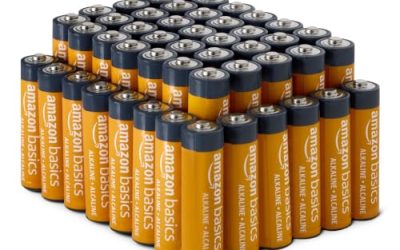
The short answer is no, not the ordinary kind. A standard single-use alkaline battery is not designed to be recharged, and makers warn against putting one in a charger. The chemistry inside a single-use alkaline cell is a one-way reaction: once the cell is spent, forcing current back through it can make it leak, swell, or rupture, and the heat can harm the charger and anything near it. So if the battery in your hand is a regular alkaline AA, AAA, C, D, or 9V cell from a shop shelf, the safe move is to use it once and then recycle it through a proper battery collection point.
That is not the whole story, because a different product exists with a similar name: the rechargeable alkaline manganese cell, often shortened to RAM. A RAM cell is built to be recharged, and it needs a charger that lists alkaline or RAM support. The chargers in this guide are exactly that kind: universal chargers whose listings name alkaline and RAM cells alongside NiMH and NiCd. So the full answer has two halves. Do not recharge a standard single-use alkaline cell. Do recharge a RAM cell, and only in a charger rated for alkaline or RAM cells.
This guide explains the difference between the two kinds of alkaline cell, shows how to tell them apart, and lists five chargers that name alkaline or RAM support on their listings. Every pick is a battery charger, because the charger is the product that decides whether a rechargeable alkaline cell can be used safely. The answer section below is general knowledge drawn from maker guidance and listing details, not the result of practical bench work.
At a Glance
- Short answer: No for standard single-use alkaline cells; yes for rechargeable alkaline manganese (RAM) cells, in the right charger.
- Why not single-use cells: Forcing current back through a one-way cell can cause leaking, swelling, or rupture.
- What a RAM cell is: An alkaline manganese cell built with a chemistry that accepts recharging, when paired with a charger that lists RAM support.
- What to look for in a charger: A listing that names alkaline or RAM among the supported chemistries, independent slots, and overcharge protection.
- What never to do: Never put a standard single-use alkaline cell in any charger, even one that lists alkaline support, unless the cell itself is marked rechargeable.
- Best single pick: The MaximalPower FC999, which names RAM and alkaline support and shows each slot on an LCD display.
How to Choose
Read the cell first, not the charger
The decision is made by the cell, not the charger. A cell marked rechargeable, or marked RAM, is the only alkaline cell that belongs in a charger. A standard single-use alkaline cell has no such marking, and the absence of that marking is the answer. If the label does not say the cell is rechargeable, treat it as single-use. This one habit prevents the most common mistake in this whole topic.
Choose a charger that names alkaline or RAM support
Many chargers list NiMH and NiCd only. Those are fine chargers for NiMH and NiCd cells, but they are not the subject of this guide. The picks below all name alkaline or RAM in their listings. The MaximalPower FC999 names alkaline, RAM, NiMH, and NiCd. The Tinyfish PPU9600 names alkaline, NiCd, and NiMH. The other three picks name alkaline support alongside NiMH and NiCd. A charger that names the chemistry is the one that has been built and labeled for it.
Look for independent slots
A charger with independent slots charges each cell on its own, so a full cell is not held at charge while a low cell catches up. The picks in this guide have four or five independent slots, and the MaximalPower FC999 has eight ports. Independent slots also let you mix sizes, such as AA and AAA, in one session, which is handy when a household has many device types.
Look for overcharge protection and a display
Overcharge protection is the safety net: the charger halts the current when a cell is full, rather than pushing current into a cell that no longer needs it. A display or LED indicator shows the state of each slot, so you can see which cells are charging and which are done. The MaximalPower FC999 has an LED and LCD display, the Tinyfish PPU9600 has a large screen with LED lights, and the other picks have LCD displays that show the charging state per slot.
Check the input voltage and the slot count
Two of the picks list a 110V input, which matches household mains in the US. One pick lists a 220V input, which is a flag: confirm the input voltage with the seller before ordering if your mains supply is 110V. Slot count matters too. A four-slot charger covers a pair of AA cells plus a pair of AAA cells, while a five-slot or eight-port charger covers more cells at once.
The Picks
1. MaximalPower FC999 Universal Battery Charger
The MaximalPower FC999 is the clearest pick in this guide, because its listing names the exact chemistries the question is about: it charges AA, AAA, C, D, and 9V cells in NiMH, NiCd, RAM (rechargeable alkaline manganese), and even alkaline. It is built with an 8-bit microprocessor that monitors and controls the charge of each battery in real time, and it has a negative delta V cut-off function and short-circuit protection. The listing also describes an LED and LCD display, so the state of each charging cycle is easy to see, and the sliding spring-loaded negative pole makes inserting any size of battery simple. The detail table lists eight ports, a 12V input, a 2A current figure, and a weight of 1.4 pounds. The maker is a US-based brand with warranty and customer service support, and combo bundles with a battery checker or organizer case are listed as options. For a household that wants one charger to cover RAM cells and NiMH cells alike, this is the pick to choose.
2. Tinyfish PPU9600 Alkaline Battery Charger, Black
The Tinyfish PPU9600 puts alkaline charging in its name, and its listing describes a universal charger for alkaline, NiCd, and NiMH cells in sizes AA, AAA, C, D, and 9V. It has five independent slots, so each battery charges on its own, and it can discharge a NiCd cell before charging, which the listing says helps the NiCd cells give their full performance output. A large screen and LED lights show the charging or discharging state. The detail table lists a 12V output, a 1A current figure, dimensions of 6 inches by 7 inches by 2.5 inches, a weight of 630 grams, and a UL specification mark. The listing notes that no cells are included. This is the pick for a buyer who wants a dedicated alkaline-capable charger with a screen that shows what each slot is doing.
3. D|C Universal Charger, 5 Independent Slots, Black
The D|C charger lists 1.5V alkaline support alongside rechargeable NiMH and NiCd 1.2V cells, in sizes AA, AAA, and 9V. Its listing describes five independent slots, a discharge plus charge function, and a bad-battery detection function that identifies cells that no longer hold a charge. An LCD display shows the charging state and progress for each slot individually, and the listing notes overcharge protection and temperature monitoring to prevent harm to the cells. The detail table lists a 12V output, a 110V input, a 4-hour charge time, a 1A current figure, dimensions of 7.6 inches by 6.1 inches by 2.1 inches, and a weight of 14.4 ounces. One wrinkle to note: the bullets describe four independent charging compartments, while the detail table lists five slots, so confirm the slot count with the seller before ordering. The warranty description on the listing is one month, which is the briefest in this guide.
4. Universal Rapid Battery Charger, Black
The Universal Rapid Battery Charger lists alkaline support alongside NiMH and NiCd, in sizes AA, AAA, C, D, and 9V. Its listing describes four independent charging slots, an LCD display that shows the charging state and can detect defective or non-rechargeable batteries, and a built-in protection circuit that guards against overcharging, over-discharging, and over-heating. The housing is described as fireproof PC and ABS material, and the adapter carries FCC and UL marks. The detail table lists a 1.5V DC output, a 110V input, dimensions of 6 inches by 7 inches by 2.55 inches, and four ports. Two flags belong in the open. The brand field on the listing reads Generic, and the maker is named as Koshore, so this is the least branded pick in the guide. It is also the pick whose defect detection is most useful, because the display can flag a cell that should not be charged at all.
5. ZUDILYO 1.5V Alkaline Battery Charging Box, 4 Slot
ZUDILYO 1.5V Alkaline Battery Charging Box, 4 Slot Sliding Type, High Efficiency, LED Indicators
The ZUDILYO charging box is the smallest and simplest pick in this guide, a four-slot sliding-type box for 1.5V alkaline batteries with LED indicators. Its listing describes a built-in intelligent charging circuit that can repair and charge most alkaline batteries, and it frames the product around reusing batteries rather than discarding them. The detail table lists a 1.5V output, dimensions of 2.6 inches by 4 inches by 1.1 inches, and a 60-day warranty. The flag on this pick is plain and important: the detail table lists an input voltage of 220V, which does not match the 110V household mains used in the US. Confirm the input voltage with the seller before ordering, and only order if the listing confirms a 110V input for your home. The listing is also the thinnest in the group, with the lowest catalog rank of the five picks, so treat it as the weakest pick here and the MaximalPower FC999 as the safer choice.
Comparison Table
| Product | Sizes | Chemistries named | Slots | Display | Input | Notes |
|---|---|---|---|---|---|---|
| MaximalPower FC999 | AA, AAA, C, D, 9V | Alkaline, RAM, NiMH, NiCd | 8 ports | LED and LCD | 12V | US-based brand, 1.4 lb |
| Tinyfish PPU9600 | AA, AAA, C, D, 9V | Alkaline, NiCd, NiMH | 5 | Large screen, LED | AC and DC adapters | UL mark, 630 g |
| D|C Universal Charger | AA, AAA, 9V | Alkaline 1.5V, NiMH, NiCd | 5 (bullets say 4) | LCD | 110V | 4-hour charge time, 1-month warranty |
| Universal Rapid Charger | AA, AAA, C, D, 9V | Alkaline, NiMH, NiCd | 4 | LCD | 110V | FCC and UL marks, brand reads Generic |
| ZUDILYO Charging Box | AA and common sizes | Alkaline 1.5V | 4 | LED | 220V listed | Confirm input voltage, weakest pick |
Which One Fits Your Situation
If you want one charger that names RAM cells directly: Take the MaximalPower FC999. Its listing is the only one here that names rechargeable alkaline manganese (RAM) cells by name, and it covers AA through 9V with eight ports, a microprocessor, and an LCD display. It is the safest single choice for this question.
If you want a screen that shows every slot: Take the Tinyfish PPU9600. Its large screen and LED lights show the charging or discharging state, and its five independent slots each charge on their own. The NiCd discharge function is a bonus if you still use NiCd cells.
If you want defect detection: Take the Universal Rapid Battery Charger. Its LCD display can detect defective or non-rechargeable batteries, which is the most useful safety feature in this group. Note the Generic brand field, and weigh it against the FCC and UL marks on the adapter.
If you want a simple four-slot box: Take the ZUDILYO charging box, but only after confirming the input voltage with the seller. The listing shows 220V input, which does not match US household mains, so this pick needs a check before ordering.
If you want the longest warranty description: Take the MaximalPower FC999, whose maker is a US-based brand with warranty and customer service support, or the Tinyfish PPU9600 with its UL mark. The D|C charger lists a one-month warranty, the briefest in this guide.
FAQ
Can I recharge a regular alkaline battery from the shop shelf?
No. A standard single-use alkaline battery is not designed to be recharged. Forcing current back through it can cause leaking, swelling, or rupture, and the heat can harm the charger. Use it once and recycle it through a proper battery collection point.
What is a rechargeable alkaline battery, then?
It is a rechargeable alkaline manganese cell, shortened to RAM. It is built with a chemistry that accepts recharging, unlike a standard single-use alkaline cell. A RAM cell must be charged in a charger that lists alkaline or RAM support, such as the MaximalPower FC999 in this guide.
How do I tell a rechargeable alkaline cell from a single-use one?
Read the label. A rechargeable cell is marked rechargeable, or marked RAM. A standard single-use cell has no such marking. If the label does not say the cell is rechargeable, treat it as single-use and do not put it in a charger.
Can a NiMH charger recharge an alkaline battery?
No, not unless the charger lists alkaline or RAM support. A charger built only for NiMH and NiCd cells is not rated for alkaline chemistry. The picks in this guide all name alkaline support in their listings, which is what sets them apart from a NiMH-only charger.
Why do some chargers list alkaline support at all?
Because RAM cells exist, and because some universal chargers are built with a mode for them. The MaximalPower FC999 listing names alkaline and RAM alongside NiMH and NiCd, and the Tinyfish PPU9600 listing names alkaline charging directly. The charger mode and the cell type must match.
Is it safe to leave a RAM cell in the charger overnight?
The picks in this guide describe overcharge protection, which halts the current when a cell is full. Even so, the safer habit is to remove cells when the display shows the charge is done, and to keep the charger on a hard, open surface away from flammable material while it runs.
What should I do with a swollen or leaking cell?
Do not charge it, do not use it, and do not put it in a household bin. Handle it with gloves, place it in a sturdy container, and take it to a battery collection point. A swollen cell is a sign that the cell has failed, and no charger can make it safe again.
Do these chargers come with batteries?
The Tinyfish PPU9600 listing states that no cells are included. The other listings describe chargers, not battery bundles, so plan to supply your own RAM or NiMH cells.
Final Take
A standard single-use alkaline battery cannot be recharged, and trying to do so risks leaking, swelling, or rupture. A rechargeable alkaline manganese (RAM) cell is a different product, built to be recharged, and it belongs in a charger that lists alkaline or RAM support. That distinction is the whole answer, and it is the line that keeps the practice safe.
If you want one charger for the job, the MaximalPower FC999 is the pick to choose: it names RAM and alkaline support directly, covers AA through 9V, and shows each slot on an LCD display. The Tinyfish PPU9600 is the runner-up for buyers who want a large screen and five independent slots. The D|C charger and the Universal Rapid Charger cover the same ground with smaller slot counts and shorter warranty descriptions, and the ZUDILYO box is the weakest pick here, held back by its 220V input figure. Whatever you choose, read the cell label first: if it does not say rechargeable, it does not belong in a charger.