Key takeaways
- Compare the best multichannel power amplifiers with balanced xlr inputs, covering seven and five channel models, wattage, triggers, and rack fit.
Moving from a receiver to separates raises one decision that shapes everything else: how many speakers will the external amplifier carry, and can every one of those channels take a balanced feed from your processor? Balanced XLR runs reject hum and noise picked up along long cable paths, so the input type matters as much as the wattage figure printed on the box.
This guide serves three groups: owners building a full seven-channel theater around a processor with XLR pre-outs, listeners upgrading a five-channel room, and studio users feeding several monitor pairs from a balanced controller. Every pick below was chosen from the names and figures on its Amazon product page, and each one pairs multiple channels with balanced XLR inputs.
Quick Picks
As an Amazon Associate we earn from qualifying purchases
| Product | Best for | Key spec from title |
|---|---|---|
| Marantz MM8077 7-Channel Power Amplifier | A full seven-channel theater fed by a processor with XLR pre-outs | 150 watts per channel into 8 ohms across 7 channels |
| Outlaw Model 7000x 7-Channel Power Amplifier | Seven bed-layer speakers in a larger room on a measured budget | 130 watts RMS per channel into 8 ohms, all channels driven |
| OSD Nero HTA7200 Multi Channel Amplifier | High-output rooms that need headroom on every channel | 210 watts per channel across 7 channels |
| Marantz MM7055 5-Channel Power Amplifier | A five-channel room moving away from receiver power | 140 watts per channel with XLR and RCA inputs on 5 channels |
How to Choose
Count the Channels You Will Hand Over
Begin with the speakers you plan to move off your current electronics, not the speakers you own today. A seven-channel amplifier covering the whole bed layer frees a processor from every amplification duty, while a five-channel unit suits rooms where two channels stay elsewhere or do not exist yet. Leaving one or two channels unused is harmless and gives you room to grow, but buying fewer channels than your layout needs means a second purchase later. Match the amplifier channel count to your final speaker layout, including any planned surround backs, before you compare wattage figures.
Confirm Balanced XLR Inputs on Every Channel
Some multichannel amplifiers mix input types, offering balanced sockets on the front channels and RCA only elsewhere, which quietly defeats the point of a balanced processor. Check the rear panel layout or the input list for each model here: every pick in this guide provides a balanced XLR input for each amplified channel, alongside an RCA option. Per-channel input selection also helps when part of a system still runs unbalanced, letting you migrate sources one row at a time without adapters or a full rewire of the rack.
Read the Wattage Conditions, Not Just the Number
A wattage figure means little without its conditions. Look for whether the number was measured with all channels driven or only two, into 8 ohms or 4 ohms, and across which frequency range. An all-channels-driven figure into 8 ohms is the most honest guide to theater use, where a loud scene asks every channel to work at once. Lower-impedance speakers draw more current, so the 4-ohm figure matters if your speakers dip low. Compare like with like across the shortlist, and favor the amplifier whose published conditions match your speakers.
Plan Triggers, Heat, and Rack Space
A separate amplifier adds practical demands a receiver hides. A 12-volt trigger input lets the processor switch the amplifier on and off with the system, avoiding a daily reach behind the rack. These chassis are deep and heavy, and Class AB and Class H designs shed real heat, so measure shelf depth, confirm the shelf can carry the weight, and leave clear air above the vents. Front-panel channel indicators are worth having too: when one speaker goes quiet mid-film, a glance at the amplifier tells you whether the channel or the source is at fault.
The 4 Best Options
Marantz MM8077 7-Channel Power Amplifier

The MM8077 is the natural anchor for a dedicated theater built around a Marantz processor or another preamp with balanced outputs. It is a seven-channel power amplifier, and its listing confirms balanced XLR inputs alongside unbalanced RCA inputs on every channel, so long cable runs from a front-of-room processor stay quiet. Power is quoted at 150 watts per channel into 8 ohms, and the current feedback design with a toroidal transformer suits demanding floorstanding speakers that dip in impedance during loud passages. Choose it when you want one chassis to carry the entire bed layer with uniform gain and voicing across all seven speakers.
Specs
- Channels: 7
- Power output: 150 watts per channel into 8 ohms
- Inputs: balanced XLR and unbalanced RCA on each channel
- Amplifier design: current feedback discrete power stage
- Power supply: toroidal transformer
- Control: remote power on and off trigger connections
Best for: a seven-channel theater whose processor offers XLR pre-outs for every speaker.
Watch out for: this is a deep, heavy chassis, so measure shelf depth and confirm your rack can carry it before ordering.
Outlaw Model 7000x 7-Channel Power Amplifier

The Model 7000x covers the same seven-channel ground with a plainer brief: honest output figures and a balanced input stage, without paying for a premium badge. It is a seven-channel power amplifier whose listing names balanced XLR inputs with common mode rejection, plus a differential-sensing RCA circuit for unbalanced sources. Output is quoted with all seven channels driven at once, which is the condition that matters in a theater, and independent power supply rectification per channel helps keep a loud center channel from tugging on the surrounds. It suits larger rooms where the budget is going toward speakers and screen rather than amplifier cosmetics.
Specs
- Channels: 7
- Power output: 130 watts RMS per channel into 8 ohms, all channels driven
- Power output: 200 watts RMS per channel into 4 ohms
- Inputs: balanced XLR with common mode rejection, plus RCA
- Input impedance: 40k ohms
- Input sensitivity: 1.2 volts
- Weight: 61.5 pounds
Best for: a seven-speaker bed layer in a bigger room where all-driven output matters more than brand polish.
Watch out for: confirm the per-channel input selector switches match your cables, since each channel can be set to XLR or RCA.
OSD Nero HTA7200 Multi Channel Amplifier

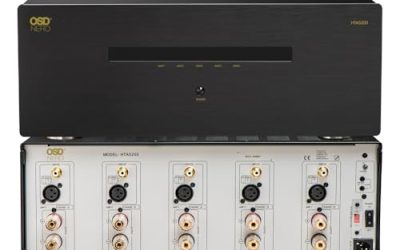
The HTA7200 is the high-output entry in this group, aimed at rooms where speakers are inefficient or the seating sits far from the screen. It is a seven-channel power amplifier, and its listing names balanced XLR inputs beside RCA inputs, so it pairs cleanly with processors and controllers that run balanced. The headline figure is 210 watts per channel, giving effects channels the same muscle as the front stage rather than treating them as an afterthought. Front-panel channel status LEDs make fault-finding simple, and a 12-volt trigger lets the amplifier wake and sleep with the rest of the system.
Specs
- Channels: 7
- Power output: 210 watts per channel
- Inputs: balanced XLR and RCA
- Control: 12V trigger for remote power on and off
- Front panel: channel status LEDs
- Model number: NERO-HTA7200
Best for: a large theater room with low-sensitivity speakers that need serious output on all seven channels.
Watch out for: high output in a single chassis means real heat, so leave generous ventilation space above and around the unit.
Marantz MM7055 5-Channel Power Amplifier
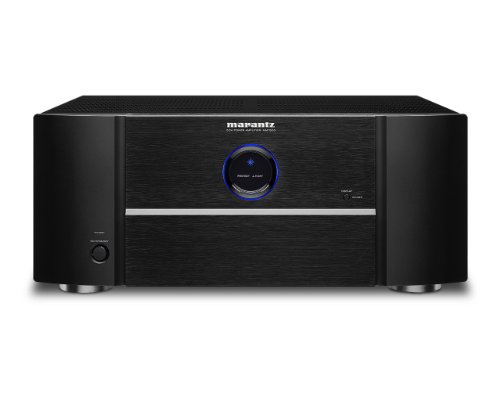
The MM7055 is the five-channel sibling for rooms that will never grow past a 5.1 layout, or for buyers who plan to keep two channels on other amplification. It is a five-channel power amplifier, and its listing confirms XLR and RCA inputs on each of the five channels, so balanced runs from a processor reach every speaker. Output is quoted at 140 watts per channel into 8 ohms, and the current feedback design with Marantz HDAM circuitry mirrors the approach of the larger MM8077 in a smaller, lighter chassis. It fits a focused room where five strong channels beat seven adequate ones.
Specs
- Channels: 5
- Power output: 140 watts per channel into 8 ohms
- Inputs: XLR and RCA on each of the 5 channels
- Circuit design: current feedback amplifier with Marantz HDAM
- Speaker terminals: gold-plated
- Power cord: detachable
Best for: a five-channel living-room theater moving from receiver power to a balanced separate amplifier.
Watch out for: the 140-watt figure is quoted with two channels driven, so check your loudest listening habits against that condition.
Which One Fits Your Situation
A Dedicated Seven-Channel Theater Room
If your room has seven speakers and a processor with a full row of XLR pre-outs, the Marantz MM8077 is the straightforward match. Uniform output across all channels keeps pans and effects consistent, the toroidal supply handles demanding speakers calmly, and the trigger link means the amplifier follows the processor without extra steps each time you sit down to watch.
A Bigger Room on a Careful Budget
When the room is large but the money is earmarked for speakers, screen, and seating, the Outlaw Model 7000x makes the sensible case. Its all-channels-driven output figure is published plainly, the balanced input stage handles long runs from an equipment closet, and seven channels in one chassis keep the rack simple while leaving funds for the parts of the system you actually see.
Power-Hungry Speakers Far From the Screen
Long throws and low-sensitivity speakers ask more of an amplifier than a cozy nearfield setup ever will. The OSD Nero HTA7200 answers with the highest per-channel figure in this guide across seven channels, balanced inputs for quiet long cable runs, and status LEDs that help you confirm every channel is alive before a film begins rather than during it.
A Five-Channel Room That Is Finished Growing
Not every system needs seven channels. If your layout is settled at five speakers, the Marantz MM7055 gives you balanced inputs and strong output on exactly the channels you own, in a chassis that is easier to house than its seven-channel sibling. The money saved can go toward the center speaker or subwoofer, where a five-channel room gains the most.
Common Mistakes
- Buying a receiver or integrated amplifier when the plan calls for a power amplifier fed by a processor, then finding there are no balanced pre-outs to feed it.
- Assuming every channel has an XLR input because the front pair does, and discovering RCA-only inputs on the surround channels after the rack is wired.
- Comparing a two-channels-driven wattage figure from one brand against an all-channels-driven figure from another and treating the bigger number as the stronger amplifier.
- Forgetting the trigger cable, so the amplifier must be switched on by hand at the rack before every session.
- Closing a heavy amplifier into a cabinet with no airflow, then blaming the amplifier for thermal shutdowns during long films.
Frequently Asked Questions
Do I need a processor with XLR pre-outs to use these amplifiers?
You need a source that can feed them, and a processor or preamp with balanced XLR pre-outs is the cleanest match. Every amplifier here also accepts RCA, so a receiver with unbalanced pre-outs can drive them today, and you can move each channel to its balanced input later when the processor arrives.
Can I mix XLR and RCA inputs on the same amplifier?
Yes, on the models here that offer a per-channel input choice. You might run the front three channels balanced from a processor and feed two surround channels from an unbalanced source during a phased upgrade. Keep the selector for each channel set to the cable actually plugged into that channel.
How much power do height and surround channels really need?
Effects channels carry less continuous energy than the front stage, but peaks still arrive without warning, and an amplifier that shares one supply across channels can sag when everything plays at once. Matching channels of equal output, as in these multichannel designs, removes the guesswork and keeps level matching simple during calibration.
Will a separate power amplifier improve sound over my receiver?
It can, mainly through headroom: demanding passages stay composed instead of hardening when the receiver runs out of current. The gain is largest with low-impedance or low-sensitivity speakers and in bigger rooms. In a small room with efficient speakers, the difference may be modest, and the money might serve you better elsewhere.