Key takeaways
- How to pick the best multichannel power amplifiers for living room audio: watts, channels, inputs, cooling, and matching an amp to your room and speakers.
As an Amazon Associate we earn from qualifying purchases.
A living room home theater eventually reaches a point where the AV receiver alone is the weak link, and the real decision becomes whether to add a dedicated multichannel power amplifier or keep running everything from the receiver. An external amplifier takes over the heavy work of driving the front, center, and surround speakers, so the receiver only handles processing and control, and the whole system gains headroom for loud movie passages without strain or harshness.
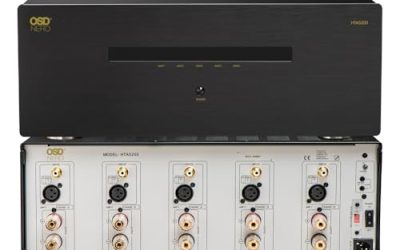
This guide is for owners of a 5.1 or 7.1 layout with a receiver that has pre-outs, buyers building a separates system around a processor, Atmos builders who need extra channels for height speakers, and anyone whose speakers sound thin or compressed at movie volume. It explains how to judge a multichannel amplifier from the specifications on its manufacturer and Amazon listing pages, using examples such as the Marantz MM7055, Outlaw Model 5000x, OSD Nero HTA5200, and Monolith 5X to show what good numbers look like.
How to Choose
Match the Channel Count to Your Speaker Layout
Count one amplifier channel for every speaker that needs power, and leave the subwoofer out, because a powered subwoofer has its own amplifier built in. A 5.1 layout needs five channels, a 7.1 layout needs seven, and a 5.1.2 Atmos layout needs seven as well, with the extra two driving the height speakers. A five-channel amplifier in a seven-speaker room forces a compromise, since two speakers would still run from the receiver while the rest run from the amplifier. Spare channels are less of a problem, as they can stay unused or drive a second zone, so choose the count that matches the layout you plan to keep for years.
Read the Watts Rating the Honest Way
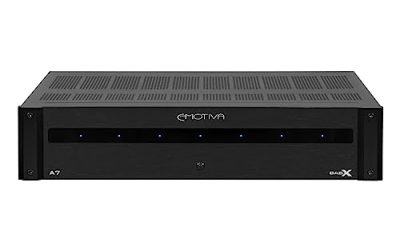
A watts figure means little unless the listing states the test conditions, so look for power measured with all channels driven across 20 Hz to 20 kHz into 8 ohms, with a distortion figure. A rating taken with one or two channels driven, or at 1 kHz, looks far bigger than the power the amplifier delivers with all channels working at once. For a living room, 90 to 140 watts per channel into 8 ohms covers most speakers; the BasX A5 at 95 watts, the Model 5000x at 120 watts, and the MM7055 at 140 watts sit in that band. Step up to 200 watts only for a large room or insensitive speakers.
Check the Inputs, Trigger, and Control Options
A multichannel power amplifier follows the processor or receiver in front of it, so its input panel decides how cleanly the two pieces work together. Balanced XLR inputs reject hum over long cable runs, which matters when the amplifier sits in a rack across the room, while RCA inputs suit the short connections most living rooms use. Check that the amplifier has one input of either type for every channel, since a five-channel amplifier with only four inputs cannot serve a full 5.1 layout. A 12-volt trigger input is equally practical, letting the amplifier switch on and off with the receiver instead of needing a manual step before every film.
Plan for Heat, Size, and Weight
Class A/B multichannel amplifiers turn their mains draw into heat, and a five- or seven-channel chassis can weigh 50 to 90 pounds, so the rack must be ready for both. Measure shelf depth, because many of these amplifiers run 16 to 18 inches deep before cables, and a shallow cabinet can press the binding posts against the back panel. Leave several inches of open air above the amplifier, and never stack another warm component on top of it. Heat sinks and thermal tunnels, such as those on the Marantz MM7055 and OSD Nero models, only work when air flows around them, and a closed cabinet shortens the life of any amplifier.
Which One Fits Your Situation
You Own a Receiver With Pre-Outs
A five-channel amplifier is the natural first step when a receiver already decodes surround sound but runs out of steam on loud passages. Connect the receiver pre-outs to the amplifier, let it drive the front three speakers and the surrounds, and the receiver keeps handling volume, room correction, and source switching. This suits owners of efficient speakers who like their receiver and only want cleaner dynamics and firmer dialogue at movie volume.
You Are Building a 5.1 System Around a Processor
A separates system starts with a surround processor and a five-channel amplifier, giving each job its own box and power supply. This suits buyers who expect to keep the amplifier for a decade while swapping the processor as formats change, keeping the signal path short and simple. Choose an amplifier with both XLR and RCA inputs, so a future processor upgrade never forces an amplifier change as well.
You Want Height Channels for Dolby Atmos
A seven-channel amplifier covers a 5.1.2 Atmos layout in one box, with five channels for the ear-level speakers and two for the heights. This suits living rooms where the ceiling speakers are already wired and the receiver has nine channels of processing but only seven of amplification. Check that the amplifier rating is quoted with all seven channels driven, since height channels still need real power during overhead effects.
Your Speakers Are Large or Hard to Drive
Large floorstanding speakers and 4-ohm models ask far more current from an amplifier than small bookshelf speakers, and this is where a high-current design earns its place. Look for a 4-ohm rating beside the 8-ohm figure, a heavy chassis with a large toroidal transformer, and binding posts that accept thick cable. Amplifiers near 200 watts per channel, such as the Monolith 5X and Monolith 7X, are built for this demanding load.
Common Mistakes
- Shopping by the biggest watts number on the box. A headline figure measured with a single channel driven at one frequency tells you almost nothing about how the amplifier behaves when five or seven channels play a film soundtrack at once. Two amplifiers can both claim impressive numbers while delivering very different real power, because one was measured with all channels driven across the full frequency range into 8 ohms and the other was measured under the easiest possible conditions. Always read the fine print beside the watts figure, compare the distortion and impedance conditions as well as the number itself, and treat a listing that hides those conditions as a warning sign rather than a bargain, then compare models on the same terms before you decide.
- Buying the wrong number of channels for the room you actually have. It is easy to order a five-channel amplifier for a system that already has seven speakers, or a seven-channel amplifier for a room that will never grow past five, and both mistakes cost money and complicate the setup. Before ordering, sketch the speaker layout on paper, count every passive speaker that needs an amplifier channel, remember that a powered subwoofer does not count, and add the height speakers if Atmos is part of the plan. If the count is uncertain, the larger amplifier is usually the safer error, because unused channels can stay idle while missing channels force an extra purchase. Plan the layout first, then buy the amplifier to match it.
- Forgetting that a power amplifier needs a preamp or processor in front of it. A multichannel power amplifier has no volume control, no source switching, no room correction, and no decoding of its own, so on its own it cannot play anything at all. Buyers who order one without checking their receiver often discover that their receiver has no pre-outs, which means there is no way to send the signal to the amplifier. Check the back of the receiver for a full set of pre-outs first, and if the receiver lacks them, budget for a processor or a receiver upgrade before spending anything on the amplifier. A quick look at the rear panel before ordering prevents this mistake entirely.
- Squeezing a hot, heavy amplifier into a closed cabinet. Class A/B multichannel amplifiers generate serious heat and can weigh as much as a small adult, yet they are often pushed into the same tight media cabinet as a games console and a cable box. Without several inches of clear air above the chassis and a path for warm air to escape, the amplifier will run hot, its protection circuits may trip during long films, and its internal parts will age faster. Measure the shelf, check the depth with cables attached, confirm the shelf can carry the weight, and leave the cabinet door open or add ventilation if the space is enclosed, and the amplifier will repay that space with years of reliable service.
- Ignoring impedance, cables, and trigger wiring until installation day. Speakers rated at 4 ohms draw far more current than 8-ohm models, and an amplifier that is only rated for 8-ohm loads can overheat or shut down when asked to drive them at volume. Thin or damaged speaker cable, loose banana plugs, and a missing 12-volt trigger cable all create problems that are easy to prevent and annoying to fix behind a rack. Read the impedance rating on the amplifier listing, match it to the speakers, buy cable of sensible gauge for the run length, and order the trigger cable with the amplifier so the whole system powers up together and the first film night runs without a trip back to the shop.
Frequently Asked Questions
Do I need a separate preamp or processor with a multichannel power amplifier?
Yes, a multichannel power amplifier only amplifies the signal it receives, so it needs a surround processor or an AV receiver with pre-outs in front of it. The processor or receiver handles source selection, volume, decoding, and room correction, while the amplifier supplies the current that drives the speakers. Without that front end, the amplifier has no way to receive or control a signal.
How many watts per channel do I need for a living room?
Most living rooms are well served by an honest 90 to 140 watts per channel into 8 ohms with all channels driven, which covers typical bookshelf and floorstanding speakers at movie volume. Larger rooms, very insensitive speakers, and 4-ohm loads call for more, and that is when a 200-watt-per-channel design makes sense. Room size, speaker sensitivity, and listening distance matter more than chasing the largest number on the listing.
Can I use a multichannel power amplifier with my existing AV receiver?
Yes, provided the receiver has a full set of pre-outs for the channels the amplifier will drive. Connect each pre-out to the matching amplifier input with RCA or XLR cables, connect the speakers to the amplifier instead of the receiver, and add a 12-volt trigger cable so the amplifier powers up with the receiver. Receivers without pre-outs cannot feed an external power amplifier at all.
What is the difference between XLR and RCA inputs on a power amplifier?
RCA inputs are unbalanced and suit short cable runs in a typical living room, while XLR inputs are balanced and reject hum and interference over longer runs. Both carry the same audio signal, and neither sounds better on a short connection, so the choice depends on cable length and what the processor or receiver offers. An amplifier with both input types gives the most flexibility for future changes.