Key takeaways
- Four Class AB power amplifiers whose Amazon listings state the class outright, compared on all-channels-driven power, inputs, triggers and rack size.
The real decision here is not how many watts you want. It is whether the amplifier you buy is genuinely Class AB. Inside a receiver, nine or eleven channels share one modest power supply, and loud scenes expose that quickly. A separate power amplifier fixes the headroom problem, but only helps your goal if the topology is the one you intended: many multichannel amplifiers sold today are Class D, and many listings never state the class at all.
This guide is for receiver owners whose unit has preamp outputs, and for separates builders assembling four-, five- or seven-channel systems. Every pick below is a standalone power amplifier whose Amazon listing states Class AB in its own feature list, and every power figure quoted comes from that same listing, rated with all channels driven.
Quick Picks
As an Amazon Associate we earn from qualifying purchases
| Product | Best for | Key spec from title |
|---|---|---|
| OSD Audio Nero HTA5200 | A 5.1 receiver upgrade with balanced inputs | 210W per channel at 4 ohms, 5 channels |
| OSD Audio Nero HTA7200 | 7.1 and 5.1.2 layouts in a single chassis | 210W per channel at 4 ohms, 7 channels |
| OSD Audio Nero HTA4200 | Front stages and bridged two-channel power | 200W per channel at 4 ohms, bridgeable to 300W |
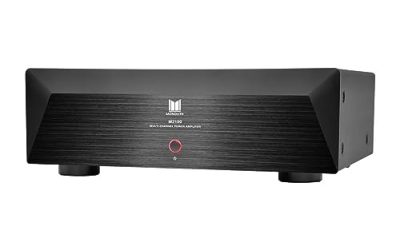
| Monoprice Monolith 5X | Maximum 8-ohm power for demanding speakers | 5×200 watts per channel into 8 ohms, dual toroidal transformers |
How to Choose
Check that the listing actually says Class AB
Amplifier class is missing from most product titles, and it is easy to buy the wrong topology by accident. Some multichannel amps are Class D, some use Class H rail switching, and some listings simply never say. If Class AB is the point of the purchase — a linear power supply, heatsink cooling — treat the feature list as the contract: if it does not state Class AB, assume it is something else. All four amplifiers in this guide state it outright. Also confirm the product is a power amplifier, not a receiver: it has no tuner, HDMI switching or decoding, so it needs a processor or receiver feeding it.
Match the channel count to your speaker layout
Count the speakers the new amplifier must drive, not the speakers you happen to own. A 5.1 system needs five channels; a 7.1 layout, or the ear-level layer of a 5.1.2 Atmos setup, needs seven. Four channels is a deliberate choice rather than a shortfall: it covers a front stage plus one more position, or bridges into two much stronger channels for demanding main speakers while something else runs the surrounds. Buying two spare channels for a future upgrade costs rack space and money today, while buying too few means a second amplifier later. The listings here span four, five and seven channels, so let the layout decide.
Compare all-channels-driven power at your impedance
A wattage figure means little until you know how it was measured. The useful rating states power with all channels driven at once, because a soundtrack can demand output from every speaker simultaneously. Then check both impedance figures: the rating into 8 ohms and into 4 ohms. Speakers rated at 4 ohms, or nominal 8-ohm speakers that dip low, draw more current and punish weak supplies. In these listings, OSD rates its amplifiers at 145 watts into 8 ohms and 210 watts into 4 ohms, while the Monolith quotes 200 watts into 8 ohms across the full 20 Hz to 20 kHz bandwidth. Headroom bought honestly is what keeps distortion down at reference volume.
Plan inputs, triggering and the shelf it sits on
Work backwards from your source. The receiver or processor needs preamp outputs for every channel you plan to offload; without pre-outs, there is nothing to connect. Balanced XLR inputs earn their keep on longer cable runs and reject hum picked up along the way, while RCA is fine for short runs inside a rack. A 12V trigger lets the amplifier wake and sleep with the rest of the system instead of needing its own power routine. Finally, measure the furniture: the amplifiers below weigh between 52 and 78.2 pounds, run a full rack width, and shed heat through top vents, so they need a strong shelf with open air above.
The 4 Best Options
OSD Audio Nero HTA5200 5-Channel Amplifier

The HTA5200 is the straightforward five-channel answer for a 5.1 room whose receiver has pre-outs but not enough muscle. Every channel receives the same 145 watts into 8 ohms, so the center channel, where dialogue lives, is not the weak link when a soundtrack gets loud. Balanced XLR inputs are uncommon at this level and suit processors and longer interconnect runs, while a status LED for each channel shows at a glance whether that channel is on, in standby or sitting in protection. For most living-room theaters moving into separates, this is the natural first step.
Specs
- Amplifier class: Class AB, as stated in the listing
- Power output: 145 watts per channel into 8 ohms; 210 watts per channel into 4 ohms, all channels driven
- Inputs: balanced XLR and unbalanced RCA
- 12V trigger for remote power on and off
- Signal-to-noise ratio: 110 dB at full power
- Channel status LEDs show ON, Standby or Protection for each channel
- Dimensions and weight: 43.43 x 42.09 x 16 cm; 28.58 kg
- Warranty: 5 years
- Model number: NERO-HTA5200
Best for: Owners of a 5.1 receiver with pre-outs who want equal, honest power on all five channels.
Watch out for: At 28.58 kg this is a two-person lift; confirm rack depth and ventilation before it arrives.
ASIN: B0CYJVNGKP
OSD Audio Nero HTA7200 7-Channel Amplifier

Choose the HTA7200 when the room runs seven speakers at ear level: a 7.1 layout, or the bed layer of a 5.1.2 system with the height channels handled by the receiver. It keeps the same per-channel output as its five-channel sibling, 145 watts into 8 ohms and 210 watts into 4 ohms with all seven channels driven, so the surrounds and rears receive the same drive as the front three instead of leftovers. The balanced inputs, 12V trigger and per-channel status LEDs carry over as well, and they matter more as channel count and cable runs grow.
Specs
- Amplifier class: Class AB, as stated in the listing
- Power output: 145 watts per channel into 8 ohms; 210 watts per channel into 4 ohms, all channels driven
- Inputs: balanced XLR and unbalanced RCA
- 12V trigger for remote power on and off
- Signal-to-noise ratio: 110 dB at full power; 105 dB at 1 watt
- Channel status LEDs show ON, Standby or Protection for each channel
- Dimensions and weight: 17.1 x 16.57 x 6.3 inches; 71 pounds
- Warranty: 5 years
- Model number: NERO-HTA7200
Best for: 7.1 and 5.1.2 systems that need one chassis to run every ear-level speaker.
Watch out for: It stands 6.3 inches tall and weighs 71 pounds, so measure rack height and leave breathing room above the vents.
ASIN: B0CYK5HQXR
OSD Audio Nero HTA4200 4-Channel Amplifier

Four channels look like an odd count until you plan around the front stage. The HTA4200 can run left, center and right plus one further position, or bridge its channels into two outputs of 300 watts at 8 ohms for a pair of demanding floorstanders, leaving surrounds to a receiver or a second amplifier. That bridging option is unique in this group, and it makes the HTA4200 the flexible pick for combined music-and-movie rooms and for staged upgrades where the front speakers get proper power first and everything else follows later.
Specs
- Amplifier class: Class AB, as stated in the listing
- Power output: 140 watts per channel into 8 ohms; 200 watts per channel into 4 ohms, all channels driven
- Bridged mode: 300 watts per channel into 8 ohms
- Inputs: balanced XLR and unbalanced RCA
- 12V trigger for remote power on and off
- Signal-to-noise ratio: 110 dB at full power; 105 dB at 1 watt
- Dimensions and weight: 17.1 x 16.57 x 6.3 inches; 52 pounds
- Warranty: 5 years
- Model number: NERO-HTA4200
Best for: Front-stage upgrades and bridged two-channel duty for power-hungry main speakers.
Watch out for: Four channels cannot run a complete 5.1 system alone, so budget for receiver power or a second amp for the rest.
ASIN: B0DH6HWRBY
Monoprice Monolith 5X 5-Channel Amplifier

The Monolith 5X is the heavyweight of this group, built around two toroidal transformers and rated at a full 200 watts per channel into 8 ohms with all channels driven across the entire 20 Hz to 20 kHz bandwidth. Its listing stresses that there is no current limiting in the amplifier circuit path, a detail that matters for speakers whose impedance dips well below their nominal rating. A signal-to-noise ratio above 120 dB is the strongest figure in this roundup. Pick it when the speakers are genuinely difficult to drive and the rack can support a 78.2-pound amplifier.
Specs
- Amplifier class: Class AB, as stated in the listing
- Power output: 200 watts per channel into 8 ohms, all channels driven; 300 watts per channel into 4 ohms
- Power supply: dual toroidal transformers
- Signal-to-noise ratio: more than 120 dB
- Inputs: XLR and RCA
- No current limiting in the amplifier circuit path
- Dimensions and weight: 16.5 x 17 x 7 inches; 78.2 pounds
- Model number: 115593
Best for: Five-channel systems with low-impedance or otherwise demanding speakers that need sustained current.
Watch out for: It is the heaviest amplifier here at 78.2 pounds and 16.5 inches deep before cables, so check shelf strength and cabinet depth.
ASIN: B073GGJ56R
Which One Fits Your Situation
Your 5.1 receiver runs out of breath at high volume
Start with the OSD Audio Nero HTA5200. Move all five speakers onto it and leave the receiver handling processing and switching, so every channel gets the same 145 watts into 8 ohms. The 12V trigger means the amplifier powers up with the receiver, and daily use feels exactly as it did before, only without the strain and compression when scenes get loud.
You are wiring a 7.1 or 5.1.2 room
The OSD Audio Nero HTA7200 covers all seven ear-level channels in one chassis, with matching power on the surrounds and rears instead of treating them as an afterthought. If your receiver will still drive a pair of height speakers, check its amp assign options first; otherwise, these seven channels form the complete bed layer and the receiver becomes a pure processor.
Your front speakers are the demanding ones
Look at the OSD Audio Nero HTA4200. Run it as four channels across the front stage and one surround position, or bridge it into two 300-watt channels for a pair of difficult floorstanding speakers and let other amplification cover the rest. It suits a staged upgrade: proper power for the fronts now, additional channels when the budget allows.
Your speakers dip to low impedances
The Monoprice Monolith 5X is built for exactly this case: 200 watts per channel into 8 ohms, 300 watts into 4 ohms, dual toroidal transformers and no current limiting in the signal path. Just make sure the furniture is up to the job, because at 78.2 pounds it behaves less like a typical component and more like a piece of gym equipment.
Common Mistakes
- Assuming an amplifier is Class AB because it is heavy or expensive; if the listing does not state the class, it may well be Class D or Class H.
- Ordering a power amplifier for a receiver that has no preamp outputs, leaving nothing to feed the new amp.
- Comparing one brand’s one-channel-driven rating against another brand’s all-channels-driven rating and treating the bigger number as stronger.
- Ignoring the 4-ohm power figure when your speakers are rated at 4 ohms or dip below their nominal impedance.
- Sealing a Class AB amplifier inside a closed cabinet, where its heatsinks cannot shed heat into open air.
Frequently Asked Questions
What is the difference between Class AB and Class D in a power amp?
Class AB uses a linear output stage, which is why these amplifiers are heavy, fitted with large heatsinks and less efficient at the wall. Class D switches its outputs at high frequency, runs cooler and fits more channels into smaller, lighter boxes. Neither approach is automatically better; this guide is for buyers who have already decided they want the Class AB route.
Can I add one of these amplifiers to my existing AV receiver?
Yes, provided the receiver has preamp outputs for the channels you want to offload. Connect the pre-outs to the amplifier inputs with RCA or XLR cables, move the speaker wires over to the amplifier, then re-run the receiver’s room calibration so levels and distances are set correctly for the new gain structure.
How many watts per channel does a home theater actually need?
Usually fewer than the biggest advertised numbers suggest, provided the rating is honest. A figure quoted with all channels driven, such as 145 watts into 8 ohms, gives more usable headroom than a larger number measured with a single channel at high distortion. Speaker sensitivity and room size influence the answer just as much as the watt figure itself.
Does a power amplifier work on its own, without a receiver or processor?
No. A power amplifier has no volume control, source switching or decoding of its own, so it needs a preamp, processor or receiver with pre-outs in front of it. That separation is the point of the format: each box does one job, and you can upgrade the amplification without replacing the processing, or the other way round.