Our Short List of 3
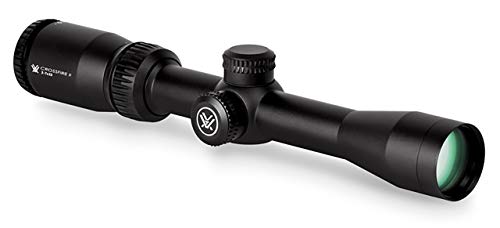
- Best for: Receiver-mounted Marlin and Henry rifles whose owners want holdover marks for shots stretching past 150 yards.
- Magnification: 2-7x
- Objective lens diameter: 32 mm
- Reticle: Dead-Hold BDC
- Focal plane: second focal plane
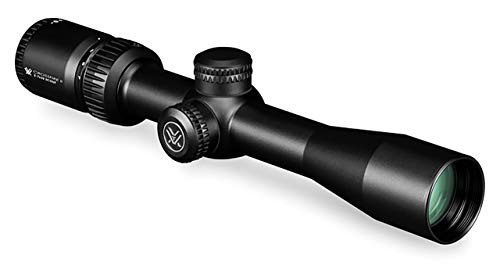
- Best for: Marlin 1895 SBL and other lever guns with a forward rail, hunted in thick cover at close range.
- Magnification: 2-7x
- Objective lens diameter: 32 mm
- Reticle: V-Plex (MOA)
- Focal plane: second focal plane
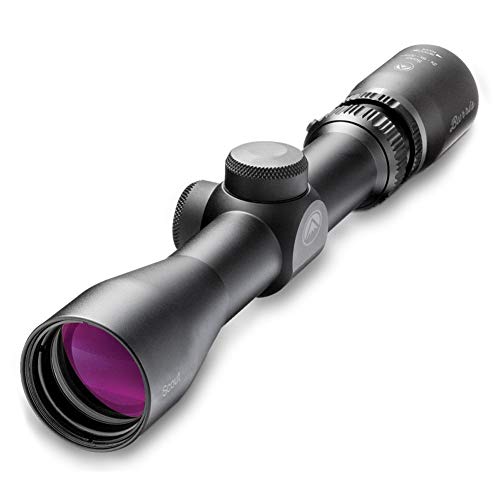
- Best for: Guide guns and scout-converted lever rifles where low weight and simplicity matter more than zoom.
- Magnification: 2.75x, fixed
- Objective lens diameter: 20 mm
- Part number: 200269
- Item weight: 198.45 grams (about 7 ounces)
All 3 Picks at a Glance
| Product | Specs | Action |
|---|---|---|
| Vortex Crossfire II 2-7×32 Dead-Hold BDC |
| Check price on Amazon |
| Vortex Crossfire II 2-7×32 Scout V-Plex |
| Check price on Amazon |
| Burris Scout 2.75×20 |
| Check price on Amazon |
Key takeaways
- Three scopes that fit .45-70 lever guns: a receiver-mount 2-7x with BDC holdover marks and two forward-mount scout scopes with long eye relief.
Scoping a .45-70 lever gun is really a decision about recoil and eye relief, not magnification. The cartridge hits hard at both ends, factory loads shove the rifle back with a short, sharp kick, and a scope with a tight eye box will find your brow. Most .45-70 hunting happens inside 150 yards, often in timber, so the winning scopes are low-powered, light, and built to hold zero under repeated heavy recoil season after season.
This roundup is for Marlin 1895 and Henry owners choosing between a forward-mounted scout scope and a conventional receiver-mount scope, and for shooters who want a fixed-power option that keeps a guide gun trim. Each pick was chosen from the names and specification fields printed on its Amazon listing, and each is a current-production or still-stocked model whose listing could be confirmed as selling now.
Quick Picks
As an Amazon Associate we earn from qualifying purchases
| Product | Best for | Key spec from title |
|---|---|---|
| Vortex Crossfire II 2-7×32 Dead-Hold BDC | Receiver-mount Marlin and Henry rifles | Dead-Hold BDC reticle, 1-inch tube |
| Vortex Crossfire II 2-7×32 Scout V-Plex | Forward rail on a Marlin 1895 SBL | V-Plex reticle, 9.5 in eye relief |
| Burris Scout 2.75×20 | Lightest fixed-power scout setup | Fixed 2.75x, 20 mm objective |
How to Choose
Eye relief and where the scope sits
Eye relief decides whether a .45-70 scope is pleasant or punishing. Conventional scopes sit over the receiver with roughly four inches of relief, which suits Henry rifles and Marlins with receiver rails. Scout scopes mount ahead of the receiver on a forward rail and need eight to fourteen inches of relief, so the two families are not interchangeable. Heavy .45-70 loads recoil fast, and a short eye box leaves no margin when you shoot uphill or from an awkward rest. Match the scope family to your rail first, then confirm the listed relief figure gives your brow room to spare on the hardest-kicking load you hunt with.
Magnification matched to .45-70 distances
.45-70 Government is a short-range cartridge in most hands. Its heavy bullets drop quickly past 150 yards, and lever guns are usually carried where shots come fast in cover. A low end of 1.5x to 2.75x keeps both eyes open and the field of view wide, which matters more than reach when a deer steps out at forty yards. A top end of 5x to 7x covers open fields and powerline cuts without adding bulk. Scopes that climb to 9x or 12x add weight, narrow the view at low settings, and solve a problem this cartridge rarely poses.
Build strength for heavy recoil
A scope that survives a .45-70 season needs more than clear glass. Look for a one-piece maintube, capped turrets that cannot be knocked off zero in a scabbard, and internal springs or locking systems designed to keep the erector assembly planted under recoil. Nitrogen purging and O-ring seals keep the tube fog-free when a warm rifle meets cold morning air. Weight matters too: every extra ounce on top of a lever gun slows its handling. Finally, weigh the warranty. A lifetime warranty that covers damage, not only defects, tells you the maker expects the scope to be knocked around.
Reticle choice for a dropping bullet
Reticle choice splits into two camps. A plain plex pattern gives a clean picture and a single honest aiming point, which suits a 100-yard zero and the short shots lever guns take most often. A BDC pattern adds holdover marks below center, useful when a field edge stretches the shot toward 200 yards and the .45-70 bullet is falling fast. Remember that on a second focal plane scope those marks only match the drop at one magnification, usually the highest. Pick the pattern that fits the longest shot you honestly take, not the longest you can imagine.
The 3 Best Options
Vortex Crossfire II 2-7×32 Dead-Hold BDC
- Best for: Receiver-mounted Marlin and Henry rifles whose owners want holdover marks for shots stretching past 150 yards.
- Magnification: 2-7x
- Objective lens diameter: 32 mm
- Reticle: Dead-Hold BDC
- Focal plane: second focal plane
Receiver-mounted Marlin and Henry rifles whose owners want holdover marks for shots stretching past 150 yards.
On this second focal plane scope the BDC marks read true at one magnification, so verify your holdover at 7x before the season.
The conventional pick of the three, this Crossfire II mounts over the receiver like a normal hunting scope, which makes it the natural fit for Henry rifles and Marlin 1895 models without a forward rail. Its Dead-Hold BDC reticle adds holdover marks for the .45-70’s arcing trajectory, and the 2-7x range covers timber and field edges alike. A forgiving eye box and capped, resettable turrets suit a rifle that gets carried far and shot from improvised rests in rough country.
Vortex Crossfire II 2-7×32 Scout V-Plex
- Best for: Marlin 1895 SBL and other lever guns with a forward rail, hunted in thick cover at close range.
- Magnification: 2-7x
- Objective lens diameter: 32 mm
- Reticle: V-Plex (MOA)
- Focal plane: second focal plane
Marlin 1895 SBL and other lever guns with a forward rail, hunted in thick cover at close range.
It only works in the forward position, and several retailers list this model as discontinued, so confirm a live featured offer on the listing before ordering.
Built for the forward rail on a Marlin 1895 SBL or a scout-converted Guide Gun, this version pushes the scope ahead of the receiver and gives 9.5 inches of eye relief, so the eyepiece stays far from your brow under recoil and the action stays clear for top loading. The plain V-Plex reticle keeps the picture uncluttered for fast shots in cover, and the 2-7x range still reaches across a clearing when a shot opens up at first light.
Burris Scout 2.75×20
- Best for: Guide guns and scout-converted lever rifles where low weight and simplicity matter more than zoom.
- Magnification: 2.75x, fixed
- Objective lens diameter: 20 mm
- Part number: 200269
- Item weight: 198.45 grams (about 7 ounces)
Guide guns and scout-converted lever rifles where low weight and simplicity matter more than zoom.
Fixed magnification and a small 20 mm objective gather less light at dawn and dusk than the 32 mm scopes above.
The minimalist option: a fixed 2.75x scout scope that weighs about seven ounces and adds almost nothing to a guide gun’s balance. Mounted ahead of the receiver, its very long eye relief range keeps the scope clear of the action and lets you shoot with both eyes open. There is no zoom ring and nothing to knock out of adjustment, which suits a knockabout rifle that lives behind a truck seat. Burris backs it with its Forever Warranty, printed right in the listing details.
Which One Fits Your Situation
Thick timber on a Marlin with a forward rail
Choose the Crossfire II Scout. Its forward position and 9.5 inches of eye relief were made for the SBL-style rail, the plain V-Plex reticle shows up fast against dark cover, and 2x at the low end keeps a close deer inside the field of view. Top loading stays unobstructed, which matters during a follow-up shot in tight cover.
A Henry or receiver-railed Marlin, shots to 200 yards
Choose the Crossfire II Dead-Hold BDC. It mounts in ordinary rings over the receiver, and its holdover marks give you a reference as the big bullet drops on a field-edge shot. Sight in at 100 yards, then verify the marks at 7x, where the second focal plane reticle reads true, before the season opens.
A guide gun that must stay light and simple
Choose the Burris Scout 2.75×20. At roughly seven ounces it barely changes how the rifle carries, the fixed power removes one more thing to fumble in the cold, and the long eye relief keeps the scope well ahead of your face when a heavy load goes off at an odd angle in the brush.
First scope on a first lever gun
Begin with the Crossfire II Dead-Hold BDC over the receiver. Its forgiving eye box is easier to learn behind than a scout scope’s distant image, the capped turrets stay put while you learn the rifle, and the BDC marks grow with you when your shots stretch past 100 yards in practice.
Common Mistakes
- Mounting a short-eye-relief scope and then shooting heavy loads: the eyepiece will eventually meet your brow, usually on an uphill shot.
- Buying magnification the cartridge cannot use: a 4-12x scope narrows the view in timber and adds weight a handy lever gun does not need.
- Putting a scout scope over the receiver, or a conventional scope on a forward rail: each family only forms a full image at its intended distance from the eye.
- Trusting a flimsy scope with exposed turrets and a two-piece tube: .45-70 recoil shakes loose parts that survive fine on softer-kicking rifles.
- Skipping the zero check after the first box of full-power loads: confirm the scope held zero before the season, not during it.
Frequently Asked Questions
How much magnification does a .45-70 lever gun actually need?
Very little. Most .45-70 shots at game fall between 25 and 150 yards, where 2x to 4x gives a wide view and quick aim. A 7x top end is enough for a careful 200-yard shot across a field. Fixed 2.75x scopes have served guide guns for decades precisely because the cartridge runs out of reach before the scope runs out of power.
How much eye relief is safe with .45-70 recoil?
For a receiver-mounted scope, look for about four inches and a forgiving eye box, then mount it as far forward as the rings allow. Scout scopes sidestep the question with eight to fourteen inches of relief. Either way, test your setup with the heaviest load you hunt with, from field positions, before trusting it.
Can I use a scout scope on a Henry lever gun?
Only if the rifle gives the scope a home ahead of the receiver. Scout scopes need a forward rail; most Henry models mount scopes over the receiver, where a scout scope’s long eye relief leaves the image small and hard to find. On a receiver-railed Henry, pick a conventional scope like the Crossfire II BDC instead.
Will heavy .45-70 recoil damage an inexpensive scope?
It can. The .45-70’s recoil arrives as a sharp snap rather than a long push, and it works on turrets, erector springs, and lens mounts season after season. One-piece tubes, capped turrets, and a warranty that covers damage are the practical defenses. Every scope in this roundup carries a lifetime warranty from its maker.